

Why this dispatch matters
In one of the boldest moves of the Iraq War, over 950 paratroopers from the 173rd Airborne Brigade jumped into northern Iraq under cover of darkness, launching Operation Northern Delay—the last large-scale U.S. combat parachute drop. This high-stakes mission opened a crucial northern front, tied down Iraqi divisions, and helped pave the way to Baghdad. From strategic improvisation to battlefield heroism, discover the untold story of how airborne forces shaped the war from 1,000 feet in the air.
Author note: Stories from the Tactically Acquired archive, built to connect military history, service identity, and collection discovery.
Opening the Northern Front: Introduction
In March 2003, the United States launched Operation Iraqi Freedom with the goal of toppling Saddam Hussein’s regime and eliminating Iraq’s suspected weapons of mass destruction. Coalition forces advanced rapidly from the south after crossing in from Kuwait, but planners knew that a single-pronged assault risked allowing Iraqi forces to consolidate and defend Baghdad more effectively. A strategic northern front was crucial—not only to divide enemy forces but also to pressure Saddam’s regime from multiple directions.
Originally, U.S. forces had intended to open this second front by deploying through Turkey, allowing heavy armor and troops to roll in from the north. However, diplomatic negotiations fell apart when the Turkish Parliament refused to grant U.S. troops access to its territory. With time running out and the southern offensive already underway, military leaders devised a bold alternative: a combat parachute assault deep into Kurdish-controlled territory in northern Iraq. This daring mission—eventually known as Operation Northern Delay—would become one of the most audacious airborne operations in modern U.S. military history.
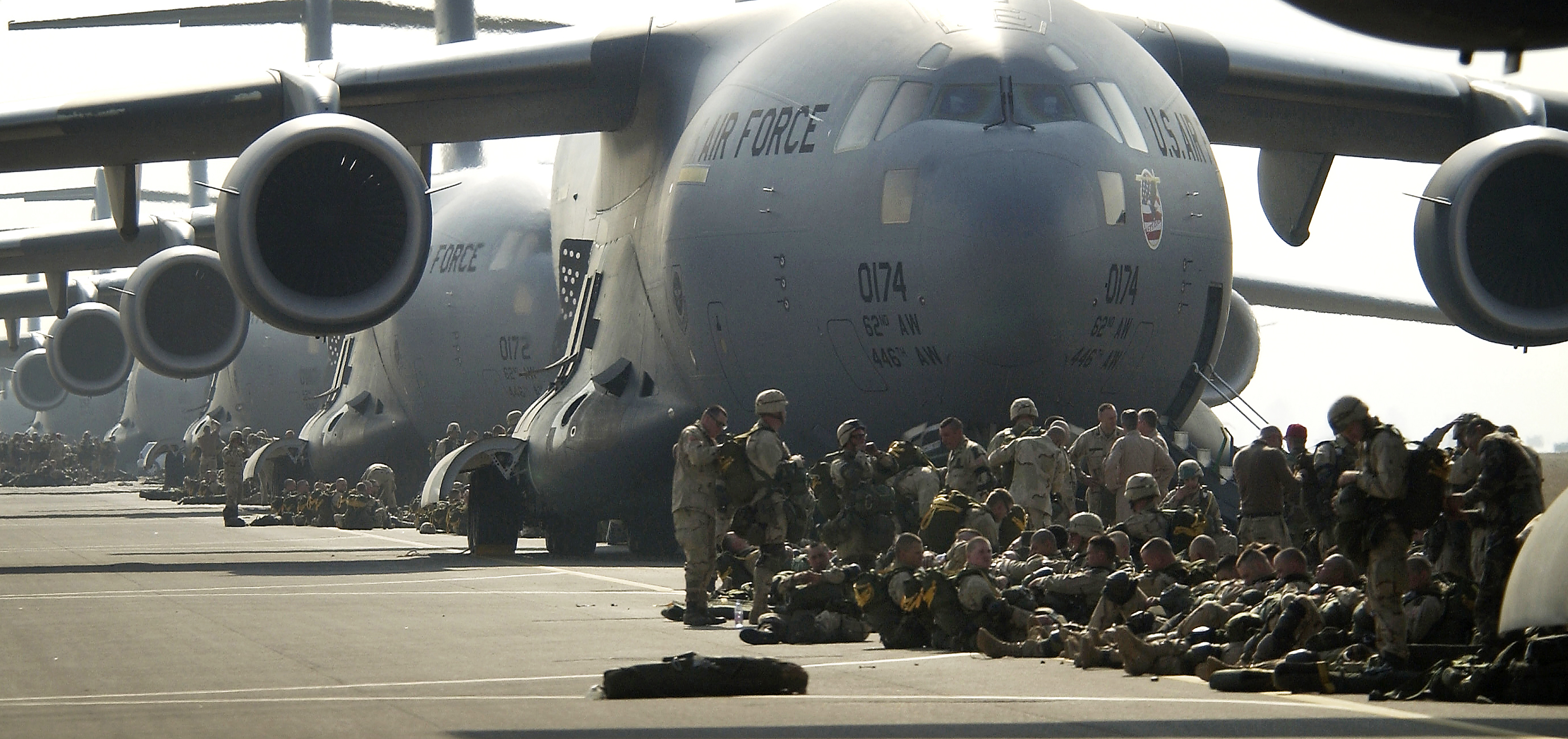 173rd Airborne Brigade troops boarding aircraft
Lead-Up to Operation Northern Delay
With Turkey refusing to allow U.S. forces passage through its territory for a northern invasion route, American military planners were forced to reconsider how to effectively open a second front in Iraq. The northern corridor was essential for drawing Iraqi forces away from the main push toward Baghdad from the south. Denied ground access through Turkish borders, U.S. Central Command pivoted to an ambitious and unconventional alternative: a combat parachute insertion directly into Kurdish-controlled northern Iraq.
This strategy would be bold and risky. Dropping American troops deep into Iraq without established ground lines of communication would require absolute precision and careful coordination. But it also offered a chance to shock Iraqi defenders by establishing an unexpected front behind their northern defenses. The mission was deemed essential not only for operational momentum but also for demonstrating U.S. military flexibility and global reach.
The 173rd Airborne Brigade, based in Vicenza, Italy, was selected to carry out the operation. Known for its rapid deployment capabilities and airborne proficiency, the brigade was already postured to respond on short notice. Within a few days, more than 950 paratroopers from the unit were loaded onto C-17 Globemaster III transport aircraft, supported by Air Mobility Command. According to Army records, this marked the first time such a large airborne force would deploy into hostile territory since World War II without prior ground support.
 173rd Airborne Brigade Insignia
The target: Bashur Airfield, a relatively undeveloped airstrip located near the town of Harir in the mountainous Kurdish region of northern Iraq. Though it lacked significant infrastructure and was surrounded by rugged terrain, Bashur was strategically chosen for its proximity to major roadways and its accessibility for future resupply by air. Intelligence indicated that the area was free of heavy Iraqi presence, but the unpredictable nature of Iraqi paramilitary resistance and the logistical hurdles of sustaining airborne troops in such a remote location made the mission anything but routine.
The choice of Bashur also enabled quick coordination with Kurdish Peshmerga fighters, who had long opposed Saddam Hussein’s regime and were eager allies. Securing the airfield would not only give coalition forces a launchpad to threaten Iraqi units in the north but also strengthen ties with local anti-Saddam militias, laying the groundwork for future joint operations. In essence, Operation Northern Delay was not just a military maneuver—it was a geopolitical signal and a logistical gamble rolled into one.

The northern front during March and April 2003
Jump into Combat: March 26, 2003
A Historic Leap into Enemy Territory
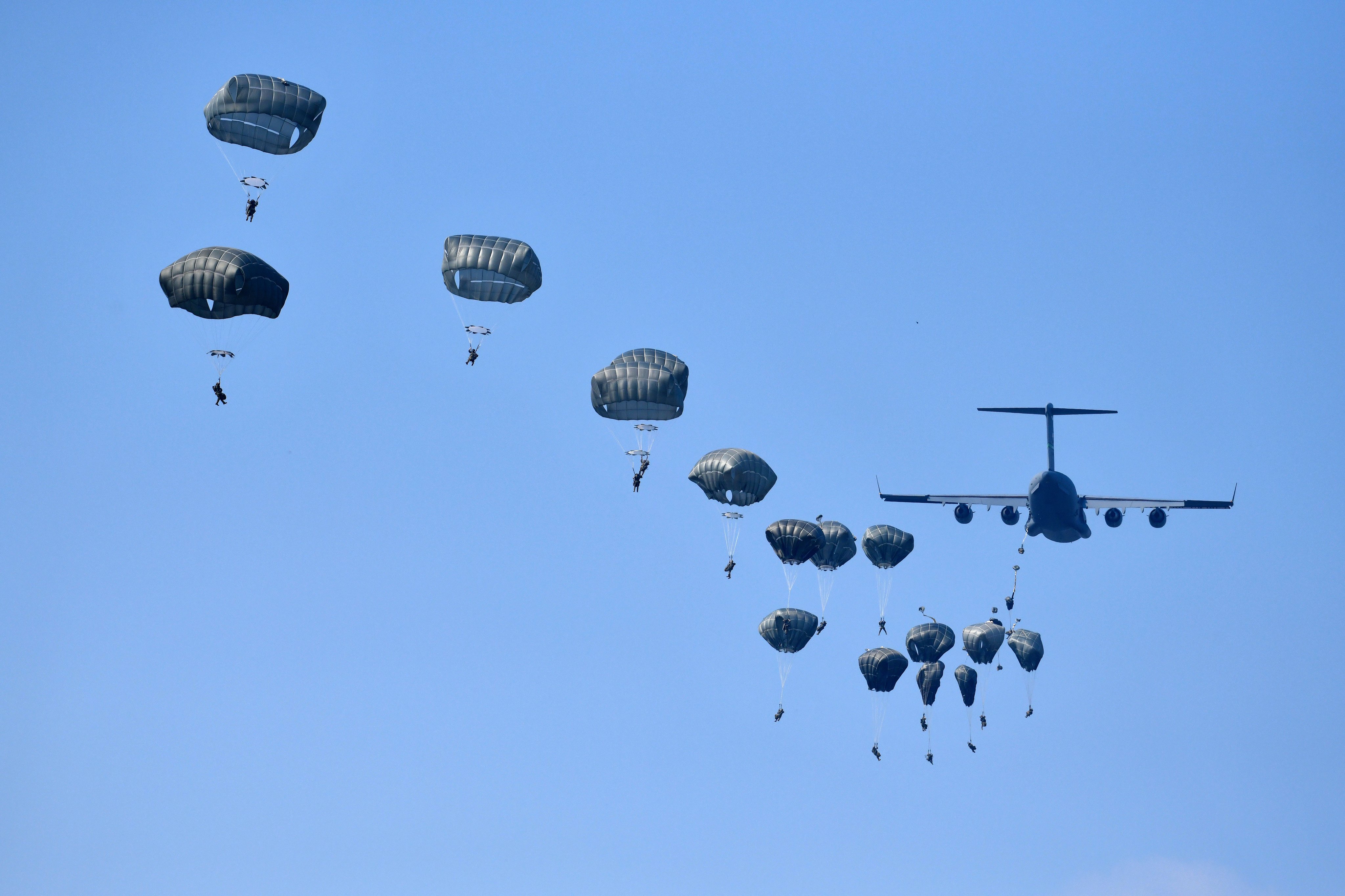
In the early hours of March 26, 2003, more than 950 paratroopers from the 173rd Airborne Brigade made the first U.S. combat jump in over a decade. Flying out of Aviano Air Base, Italy, aboard C-17 Globemaster III aircraft operated by the 62d Airlift Wing, 315th Airlift Wing, 437th Airlift Wing, and 446th Airlift Wing, the paratroopers dropped from an altitude of just 1,000 feet over the mountainous terrain near Bashur, Iraq.
Execution Under Pressure
Despite the risks associated with night operations over rugged, unfamiliar ground, the jump was carried out with precision. As detailed by the U.S. Army’s 20th anniversary commemoration, paratroopers encountered strong winds and uneven terrain upon descent, but training and coordination ensured minimal injuries.
The Iraqi military, caught off guard, offered only light resistance. This lack of organized opposition was due in part to the remote location and careful planning that masked the U.S. approach. According to GlobalSecurity.org, the mission was a strategic surprise, placing a full American brigade in a rear area previously believed inaccessible due to diplomatic constraints with Turkey.
Securing the Drop Zone
Within hours of landing, the 173rd had secured Bashur Airfield, a rough landing strip surrounded by hills and farmland. Soldiers quickly established a defensive perimeter, dug in fighting positions, and prepared for follow-on waves of personnel and equipment. Working side-by-side with Kurdish Peshmerga fighters, they gained situational control of the region.
One of the jump’s immediate goals was to prepare the airfield for sustained logistics operations. The strip, though primitive, became a lifeline.
Heavy Lifters Arrive
Shortly after securing the airfield, C-17 transport planes began combat landings with heavy equipment: Humvees, artillery, and palletized supplies were offloaded rapidly onto the unimproved surface. As described in the McChord Air Force Base article, the Air Mobility Command executed this phase with precision, overcoming challenging terrain and a lack of infrastructure.
The rapid delivery of equipment and reinforcements enabled the 173rd to expand its foothold, establish communications, and begin coordinating with Kurdish partners for subsequent operations against Iraqi forces.
Strategic Consequences
Operation Northern Delay had immediate strategic consequences. The sudden airborne presence in Iraq’s north forced Saddam Hussein to divert several divisions of the Iraqi Army—including key Republican Guard units—away from defending Baghdad. This realignment of Iraqi forces significantly reduced resistance to Coalition forces advancing from the south.
As outlined in the Army War College’s analysis, the success of this operation proved the effectiveness of joint forcible entry as a modern military doctrine and highlighted the flexibility of airborne units in high-risk theaters.
Establishing the Foothold
Building a Logistics Hub in Hostile Terrain
Following the successful airborne insertion, the 173rd Airborne Brigade quickly transitioned from parachuting into hostile territory to engineering a viable operational base at Bashur Airfield. The airfield, though remote and unimproved, was critical for the success of the northern front. The immediate priority was transforming the drop zone into a functional logistics hub capable of sustaining extended combat operations.
Within hours of securing the perimeter, soldiers began marking landing zones, unloading pallets, and constructing basic infrastructure under austere conditions. Over the following days, C-17 aircraft conducted continuous resupply flights, delivering not only troops but also Humvees, artillery, fuel bladders, rations, ammunition, and communication equipment. These efforts were essential to keeping the brigade mobile and mission-capable deep behind enemy lines.
Coordinating with the Kurdish Peshmerga
One of the most valuable assets on the ground came not from the air, but from longstanding local resistance: the Kurdish Peshmerga. Almost immediately after the jump, U.S. commanders began coordinating closely with Kurdish fighters. These local forces provided detailed intelligence on terrain, enemy activity, and safe movement corridors.
This partnership significantly enhanced the situational awareness of the 173rd and gave U.S. forces a force multiplier in their efforts to monitor and control the region. In return, the Kurds benefited from American logistical support and firepower, which strengthened their position in the struggle against Saddam Hussein’s regime.
 Kurdish Peshmerga fighter in 2003
Defending and Expanding the Perimeter
With the airfield secured and supply lines established, the next step was to harden defenses and prepare for any potential counterattack. Soldiers dug fighting positions, set up observation posts, and conducted aggressive patrols through the surrounding hills and villages to secure the operational area. Defensive perimeters were reinforced with concertina wire, crew-served weapons, and forward observation positions.
While the Iraqi Army never mounted a significant counteroffensive at Bashur, the risk of infiltration or harassment from irregular forces kept the unit vigilant. The terrain and unpredictable weather added complexity, but morale remained high due to the strategic significance of the mission.
Bashur as a Strategic Launch Point
Beyond its immediate military utility, Bashur Airfield served as a vital launch point for future operations in northern Iraq. It provided a staging ground for follow-on forces, a base for political coordination with Kurdish leadership, and even a logistical hub for limited humanitarian assistance.
The ability to sustain a U.S. combat brigade deep inside Iraqi territory without access through neighboring countries was a powerful demonstration of strategic flexibility. Bashur’s success proved that airborne forces, when properly supported, could project power effectively in even the most remote and politically complex environments.
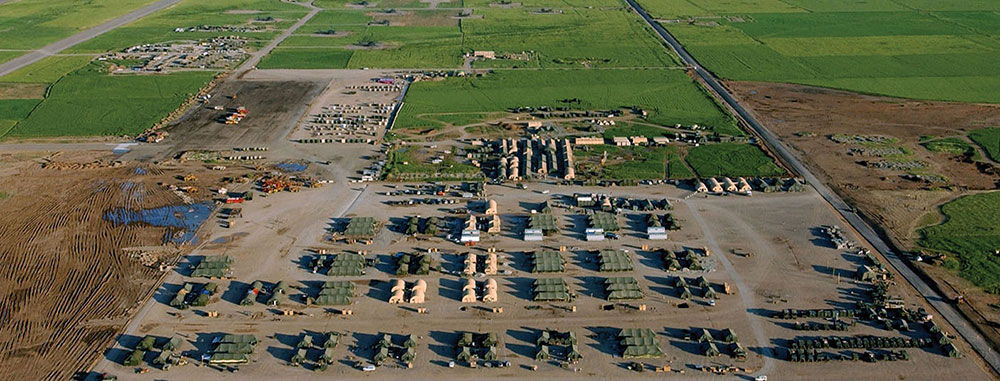 In a matter of days a Forward Operating Base was established at Bashur
The Strategic Impact
Diverting Iraqi Forces from the Southern Front
Operation Northern Delay achieved more than just tactical success—it imposed a major strategic dilemma on Saddam Hussein’s regime. The sudden appearance of nearly 1,000 U.S. paratroopers behind Iraqi lines forced Iraqi military planners to reconsider their defensive posture. Although Baghdad remained the primary target of the coalition’s main assault from the south, the establishment of a credible threat in the north meant that Saddam’s commanders had to hedge their bets.
Several Iraqi Army and Republican Guard divisions were consequently held in the northern region rather than reinforcing the southern approaches to the capital. Most notably, Republican Guard units that might have contested the coalition’s advance toward Baghdad were instead retained near Mosul and Kirkuk. This division of forces ultimately weakened Iraq’s ability to mount a coordinated or concentrated defense, accelerating the coalition’s drive toward Baghdad and contributing to the regime’s rapid collapse.
Empowering Kurdish Allies and Expanding the Front
The deployment of the 173rd Airborne Brigade not only brought U.S. combat power into northern Iraq—it also dramatically bolstered Kurdish morale and operational capacity. Kurdish Peshmerga fighters, long opposed to Saddam Hussein, had significant knowledge of the terrain and a strong motivation to reclaim lost territory.
Once the U.S. presence was established at Bashur Airfield, coordination with the Kurds intensified. Backed by American intelligence, logistics, and firepower, the Peshmerga were able to shift from defensive postures to offensive operations. Together, U.S. and Kurdish forces launched joint actions that harassed and dislodged Iraqi positions in the north, sowing further confusion and disarray in Saddam’s ranks.
This collaboration laid early groundwork for long-term cooperation between U.S. and Kurdish forces—an alliance that would prove strategically valuable in the years to follow.
Disrupting Iraqi Command and Control
The psychological impact of the jump and the confusion it introduced into Iraqi planning cannot be overstated. Saddam’s regime had already suffered a blow to morale with the overwhelming U.S. air superiority and rapid gains in the south. The airborne assault added another layer of complexity, forcing commanders to split their focus across distant and disconnected fronts.
Communications among Iraqi field commanders became strained, and many units failed to receive timely or accurate orders. This operational disarray made coordinated defense or counterattacks difficult. Even though no massive armored push came from the north, the perceived threat was enough to strain Iraq’s already faltering command-and-control structure.
A Blueprint for Asymmetric Strategic Success
Operation Northern Delay offers a textbook example of how a relatively small, well-coordinated force can generate disproportionate strategic effects. By inserting elite paratroopers into a remote theater and quickly establishing a functioning base, the U.S. military demonstrated its ability to project power in unconventional and flexible ways.
While Bashur Airfield was not the launchpad for a massive offensive, its existence and the sustained presence of American troops in the north changed the Iraqi calculus. It helped the coalition avoid potentially bloody urban engagements by diffusing enemy strength and disrupting their ability to consolidate forces.
The operation thus stands not only as a notable military achievement but as a lesson in how airborne operations, when skillfully executed and integrated with local allies, can shape a theater of war far beyond the immediate battlefield.
 173rd Airborne Brigade soldier boards a C-17 Globemaster III
The Last Combat Jump
Historic Leap into Combat
On March 26, 2003, under the cover of night, more than 950 paratroopers from the 173rd Airborne Brigade executed a daring combat parachute assault onto Bashur Airfield in northern Iraq. Dropping from C-17 Globemaster III aircraft at an altitude of roughly 1,000 feet, the soldiers landed deep in Kurdish-held territory—marking the first and only U.S. combat jump of Operation Iraqi Freedom. It was also the largest U.S. combat parachute operation since Panama in 1989 and remains the last large-scale combat jump by U.S. forces to date.
This historic moment was the culmination of meticulous planning and split-second execution. Despite the inherent risks—including enemy fire, rugged terrain, and challenging weather—the jump was executed with near-flawless precision. The element of surprise, combined with pre-jump reconnaissance and intelligence coordination with Kurdish allies, helped minimize opposition on the ground. The absence of Turkish approval for ground access made this operation not just bold, but necessary—reasserting airborne forces as a viable option in modern warfare.
Demonstrating Strategic Reach
The Bashur jump served as a powerful demonstration of the U.S. military’s global reach and operational flexibility. With Turkey refusing to permit overland passage, American planners turned to a high-risk, high-reward solution: inserting a brigade-size element by air, directly into hostile territory. It was a logistical feat made possible by the global mobility of the Air Force’s C-17 fleet and the readiness of the 173rd.
By successfully projecting a combat-ready force into northern Iraq without reliance on regional allies, the U.S. signaled to both friends and adversaries that geography and diplomacy would not constrain American military options. This capacity for independent force projection has since become a cornerstone of joint-forcible entry doctrine and remains a point of pride for U.S. airborne forces.
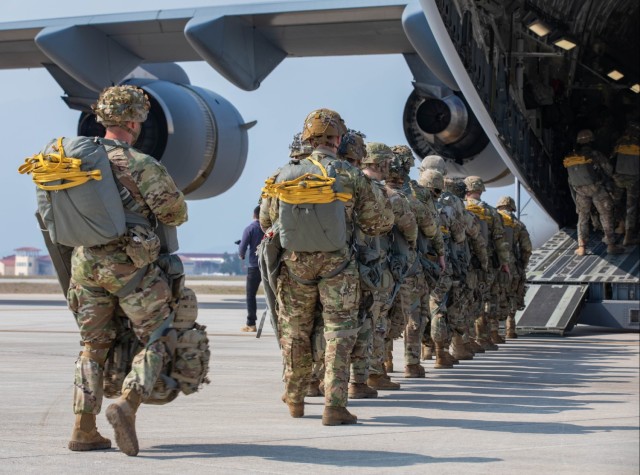 Paratroopers assigned to 2nd Battalion, 503rd Parachute Infantry Regiment, 173rd Airborne Brigade board a C-17 aircraft in preparation for an airborne operation in commemoration of the 20th anniversary of Operation Northern Delay
Honoring the Legacy: 20 Years Later
In 2023, veterans of the 173rd Airborne Brigade gathered at Caserma Ederle in Vicenza, Italy—home of the brigade—to commemorate the 20th anniversary of Operation Northern Delay. The ceremonies included reenactments, jumps by current paratroopers, and speeches from past and present leaders. Soldiers reflected on the mission's complexity, the teamwork that made it possible, and the enduring bonds forged through shared hardship.
Official Army commemorations, including coverage from the U.S. Army and Air Force public affairs offices, emphasized not only the tactical importance of the operation, but also its symbolic value. Photos of the event showed paratroopers in formation, a C-17 on display, and the passing of unit history from one generation to the next. Veterans spoke with pride about having participated in a mission that tested and affirmed the relevance of airborne forces in a new century.
A Defining Moment in Airborne History
Operation Northern Delay remains a pivotal moment in the history of U.S. airborne operations. It tested the limits of rapid deployment, validated the use of airborne troops in modern conflict, and reinforced the value of joint operations in contested environments. While no similar large-scale combat jump has occurred since, the mission continues to shape U.S. military doctrine and inspire today’s paratroopers.
The legacy of the 173rd’s jump into Bashur endures not only in commemorative ceremonies, but in the continued emphasis on readiness, interoperability, and courage under fire. As airborne doctrine evolves, the lessons of March 26, 2003, remain a benchmark for what determined leadership and strategic daring can accomplish.
 Paratroopers assigned to 2nd Battalion, 503rd Parachute Infantry Regiment, 173rd Airborne Brigade walk out to a C-17 aircraft in preparation for an airborne operation in commemoration of the 20th anniversary of Operation Northern Delay
Heroes and Hardships
Operation Northern Delay was not just a strategic success—it was a true test of endurance, leadership, and courage. The paratroopers of the 173rd Airborne Brigade faced immense physical demands as they jumped from C-17 aircraft into the rugged and unfamiliar terrain of northern Iraq. Laden with combat gear and supplies, each paratrooper hit the ground ready for immediate action, despite the disorientation and fatigue of a nighttime combat jump.
The challenges didn’t stop at landing. The area around Bashur Airfield was undeveloped and remote, with limited infrastructure to support rapid operations. Troops quickly established defensive positions and began securing the perimeter, but they had to adapt to hostile terrain and the ever-present threat of enemy forces. Despite these obstacles, leaders at every level rose to the occasion. Squad leaders coordinated rapid deployments, platoon commanders established logistics hubs, and support teams worked tirelessly to keep the mission moving forward.
One of the most critical hardships was the logistical challenge of resupply. Without a nearby seaport or road access, the only way to sustain the operation was through continuous airlift. C-17 cargo planes operated in a relentless rhythm, delivering everything from fuel to food and heavy vehicles—all while under the pressure of establishing a strong foothold in enemy territory. The operation showcased not only combat skill but also the grit and determination of the U.S. military to adapt and overcome under extreme conditions.
 173rd Airborne Brigade Soldiers after landing in the Bashur Drop Zone in Northern Iraq
Legacy and Lessons
Operation Northern Delay left a lasting imprint on modern military strategy and airborne doctrine. As the first and only combat jump of Operation Iraqi Freedom, and the last large-scale combat jump conducted by U.S. forces to date, it served as a pivotal case study for how airborne troops can be rapidly inserted deep behind enemy lines—especially when traditional routes are denied, as they were by Turkey.
The mission demonstrated the strategic value of joint operations with local forces, particularly with the Kurdish Peshmerga, who provided critical ground support and intelligence. This cooperation underscored the effectiveness of partnering with indigenous allies to achieve rapid and sustainable progress in contested regions.
In the years since, military planners and strategists have cited Operation Northern Delay as a key example of how airborne forces remain relevant in 21st-century warfare—not just as a tool of brute force, but as a flexible, high-impact option for opening new fronts and shaping the battlefield. Its lessons continue to inform joint forcible entry doctrine, particularly regarding logistics, coordination, and speed in executing precision objectives under pressure.
 173rd Airborne Brigade Shirt on Tactically Acquired
Conclusion
Operation Northern Delay stands as one of the boldest and most innovative military maneuvers of the Iraq War. With over 950 paratroopers of the 173rd Airborne Brigade jumping into hostile territory under cover of darkness, the operation exemplified the power of surprise, precision, and airborne dominance. Despite logistical hurdles and the geopolitical roadblocks posed by Turkey's refusal to grant passage, U.S. forces adapted quickly—seizing Bashur Airfield and opening a critical northern front that diverted Iraqi divisions and aided the rapid fall of Baghdad.
Behind the strategic success were the bravery, discipline, and coordination of the soldiers who made the jump and held the line. Their actions ensured not only a successful insertion but also demonstrated the enduring relevance of airborne forces in modern combat. Operation Northern Delay remains a testament to America's ability to adapt and execute under pressure—and to the courage of those who lead the way, from 1,000 feet above the battlefield.
Keep the reader moving

If the invasion had been postponed to the next available window on June 18-20, the consequences would have...

The scale of the challenge was almost incomprehensible. In 1940, the entire American military establishment was built around...
Five programs. Conceived in the early 1970s. Fielded by the early 1980s. Proven in combat in 1991. Still...
Continue the mission
Get new dispatches, conflict drops, and collection launches delivered directly to your inbox.
1 Comment
After action discussion - moderated before publication.
Why do they always leave out 1st ID 1BN-63AR and BCO 2-2IN out of vilseck Germany. We had are vehicles on the birds and air landed behind them. I was there for parts of these operation. Only battalion as fare as I know from 1ID to be there in 2003.