U.S. Army
Airborne
They volunteered three times — for the Army, for Airborne, and for every jump after. From the Test Platoon at Fort Benning in 1940 to the 82nd Airborne's Division Ready Force standing by to deploy anywhere on earth in 18 hours, American paratroopers have been first into every fight. Five jumps earn the wings. Everything after earns the legend.
World War II — The First Jumps
1942 – 1945
NORMANDY
JUNE 5-6, 1944
13,100
Paratroopers
82nd
Airborne · Ste-Mère
101st
Airborne · Carentan
H-Minus
BEFORE THE BEACHES
In the darkness before D-Day, 13,100 American paratroopers jumped into Normandy — hours before the first soldier hit the beach. The 82nd Airborne seized Sainte-Mère-Église and the bridges over the Merderet. The 101st Airborne secured the causeways behind Utah Beach and fought for Carentan. Pathfinders jumped first to mark the drop zones. Most sticks were scattered across miles of hedgerow country. They fought in small groups, in the dark, with no idea where they were. They took Normandy anyway.

Read more
Explore Collection
THE BULGE
DECEMBER 1944
101st
Airborne Surrounded
NUTS!
BG McAuliffe's Reply
7 Days
Surrounded
Dec 26
RELIEVED BY 4th AD
When the German Ardennes Offensive shattered the American line in December 1944, the 101st Airborne was trucked to Bastogne — the critical crossroads the Germans needed. Surrounded, outnumbered, low on ammunition and medical supplies, freezing in summer uniforms, the Screaming Eagles held. When the Germans demanded surrender, BG Anthony McAuliffe's reply was one word: "NUTS!" The 4th Armored Division broke through on December 26. Bastogne never fell.
Read more
Explore Collection
HOLLAND
SEPTEMBER 17, 1944
82nd
Airborne · Nijmegen
101st
Airborne · Eindhoven
20,000
U.S. Paratroopers
Waal
RIVER CROSSING
The largest airborne operation in history. 20,000 American paratroopers dropped into Holland to seize the bridges that would open a highway into Germany. The 101st took the bridges at Eindhoven and Veghel. The 82nd seized the Groesbeek Heights and crossed the Waal River at Nijmegen in canvas boats under direct fire — one of the most daring river assaults in military history. The operation failed at Arnhem, but American airborne accomplished every mission assigned to them.
Read more
Explore Collection
RHINELAND
MARCH 24, 1945
17th
Airborne Division
16,000
Paratroopers
Rhine
River Crossing
Last
MASS JUMP · ETO
The last major airborne operation in the European Theater. The 17th Airborne Division jumped across the Rhine River in daylight — directly onto German positions. Unlike Normandy, where paratroopers were scattered for miles, Varsity dropped in concentrated formations and overwhelmed the defenders within hours. The 17th Airborne took heavy casualties in the drop but secured the east bank. The road into Germany was open.
Read more
Explore Collection
PACIFIC
LEYTE · MANILA · LUZON
11th
Airborne Division
Leyte
1st Pacific Jump
Manila
Los Baños Raid
2,000+
INTERNEES RESCUED
While the 82nd and 101st fought in Europe, the 11th Airborne Division carried the airborne mission in the Pacific. The Angels jumped onto Leyte and fought across Luzon. Their raid on the Los Baños internment camp — a combined parachute and amphibious assault that freed over 2,000 civilian internees from Japanese captivity — is considered one of the most successful rescue operations in military history.
Read more
Explore Collection
Korea & Vietnam
1950 – 1975
KOREA
187th ARCT
187th
Rakkasans
2
Combat Jumps
Sukchon
Sunchon · Munsan-ni
3,000+
PARATROOPERS
The 187th Airborne Regimental Combat Team — the Rakkasans — made two combat jumps in Korea. At Sukchon-Sunchon in October 1950, they jumped behind North Korean lines to cut off retreating enemy forces and rescue American POWs. At Munsan-ni in March 1951, they jumped to block Chinese withdrawal routes. Korea proved that even in the jet age, paratroopers could seize ground no other force could reach in time.
Read more
Explore Collection
VIETNAM
DAK TO · HILL 875
173rd
Sky Soldiers
1st
Major Army Unit In
Hill 875
87 KIA · 3 Days
Only
COMBAT JUMP · VN
The 173rd Airborne Brigade was the first major Army ground unit deployed to Vietnam — and made the only combat jump of the war, Operation Hump in February 1967. At Dak To in November 1967, the 2nd Battalion, 503rd Infantry fought the Battle of Hill 875 — three days of savage uphill assault into entrenched NVA positions. Eighty-seven paratroopers were killed. The hill was taken on Thanksgiving Day. The cost was unspeakable.
Read more
Explore Collection
Active Airborne Divisions
Regular Army
ALL AMERICAN
FORT LIBERTY, NC
1917
Activated
3
BCTs Active
18 Hrs
Worldwide Deploy
DRF
DIV READY FORCE
America's Guard of Honor — the only division-sized airborne force in the world capable of deploying within 18 hours to any point on the globe. The Division Ready Force keeps one brigade on two-hour recall at all times. The 82nd jumped into Sicily, Normandy, Nijmegen, and the Bulge. They jumped into Panama. They've been on the ground in every conflict since — Grenada, Iraq, Afghanistan — and remain the first conventional force the President calls when the world catches fire.
Read more
Explore Collection
SCREAMING EAGLES
FORT CAMPBELL, KY
1942
Activated
3
BCTs Active
Air Assault
Converted 1974
OIF
OEF · EVERY FIGHT
The Screaming Eagles jumped into Normandy, held Bastogne, and fought through Holland. In Vietnam they converted from parachute to air assault — the helicopter replaced the C-47. During Desert Storm, the 101st executed the largest air assault in history, leapfrogging 150 miles into Iraq. Every deployment since 9/11 has put Screaming Eagles in the fight. Based at Fort Campbell, Kentucky, the 101st is the world's only air assault division.
Read more
Explore Collection
ARCTIC ANGELS
FORT WAINWRIGHT, AK
1943
Original Activation
2022
Reactivated
2
BCTs Active
Arctic
WARFARE MISSION
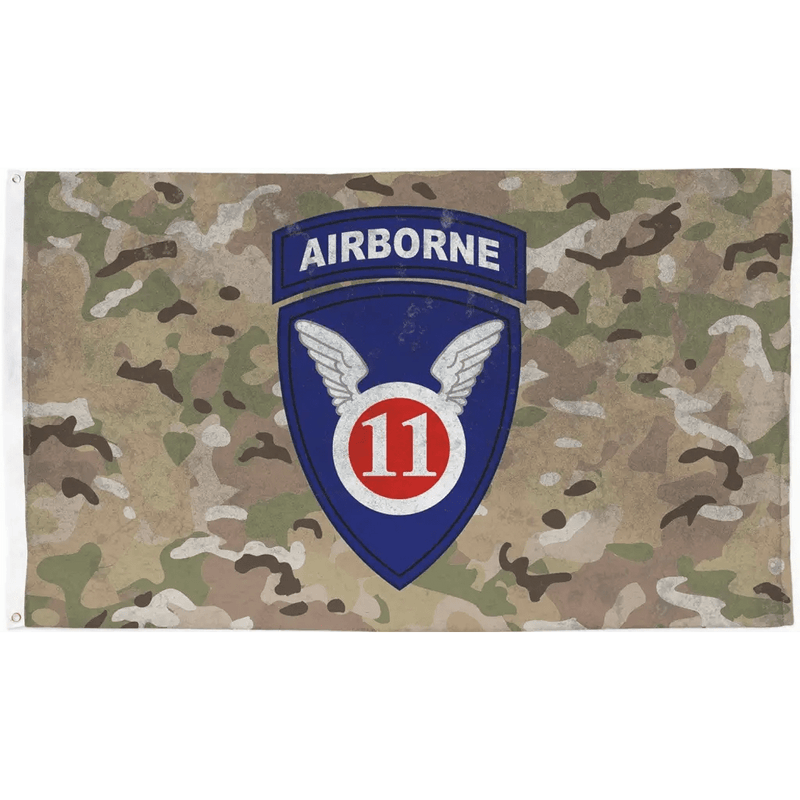
Reborn in 2022 as the Army's newest division. The original 11th Airborne fought across the Pacific in WWII. Now redesignated for Arctic and extreme cold weather operations in Alaska, the Arctic Angels train for the kind of warfare most units can't survive — temperatures below minus 60, whiteout conditions, and terrain that kills before the enemy does. The Army's answer to great power competition in the High North.
Read more
Explore Collection
Deactivated Airborne Divisions
Legacy
GOLDEN TALONS
DEACTIVATED 1945
1943
Activated
Bulge
Ground Combat
Varsity
Rhine Jump
1945
DEACTIVATED
The Golden Talons fought in the Bulge as ground infantry before making their combat jump during Operation Varsity — the last major airborne operation in Europe. The 17th Airborne jumped across the Rhine in daylight onto prepared German positions, took heavy drop-zone casualties, and secured the east bank. Deactivated shortly after V-E Day, the 17th's single combat jump was one of the most violent in airborne history.
Read more
Explore Collection
BLACK CATS
DEACTIVATED 1946
1943
Activated
France
Deployed to ETO
0
Combat Jumps
1946
DEACTIVATED
The 13th Airborne Division deployed to France in January 1945, trained, and waited for a combat jump that never came. Operations were planned and cancelled — Varsity went to the 17th, other missions were overtaken by the ground advance. The Black Cats were fully trained, fully ready, and never used. They remain the only airborne division in Army history that deployed overseas but never made a combat jump. Sometimes the war just ends before your number is called.
Read more
Explore Collection
Storied Regiments
Lineage & Honors
505th PIR
82nd AIRBORNE
1942
Activated
Sicily
1st Combat Jump
Normandy
H-Minus · Night Jump
82nd
AIRBORNE DIVISION
The first American parachute infantry regiment to make a combat jump — Sicily, July 1943. Then Salerno. Then Normandy at H-Minus, jumping into the darkness hours before the beach landings. At Nijmegen, the 505th crossed the Waal in canvas boats under direct fire. LTC Benjamin Vandervoort fought with a broken ankle at Sainte-Mère-Église. The regiment that proved airborne infantry could win wars.
Read more
Explore Collection
504th PIR
82nd AIRBORNE
1942
Activated
Anzio
"Devils" — German Diary
Waal
River Crossing
82nd
AIRBORNE DIVISION
"Devils in Baggy Pants" — the name came from a captured German officer's diary at Anzio: "American paratroopers — devils in baggy pants — are all around us." The 504th jumped into Sicily, reinforced Salerno, and held the Anzio beachhead. At Nijmegen, they crossed the Waal in flimsy boats under withering fire to seize the bridge. One of the most battle-tested regiments in airborne history.
Read more
Explore Collection
CURRAHEE
101st AIRBORNE
1942
Activated
Normandy
Bastogne · Eagles Nest
Band of
Brothers · E Co
101st
AIRBORNE DIVISION
Band of Brothers. Easy Company, 506th PIR, jumped into Normandy and fought from Carentan to Bastogne to Hitler's Eagle's Nest. "Currahee" — Cherokee for "stands alone" — the mountain they ran at Toccoa. Stephen Ambrose's book and HBO's series made the 506th the most famous regiment in American history. The regiment continued to fight in Vietnam and Iraq, carrying the same lineage from Normandy to Ramadi.
Read more
Explore Collection
THE ROCK
173rd AIRBORNE
1942
Activated
Corregidor
The Rock Jump
Hill 875
Dak To · Vietnam
173rd
AIRBORNE BRIGADE
The Rock Regiment earned its name jumping onto the fortress island of Corregidor in February 1945 — paratroopers landing on a tiny drop zone atop sheer cliffs, retaking the island the Japanese had held for three years. In Vietnam with the 173rd, the 503rd fought the Battle of Dak To — Hill 875 cost 87 killed and 130 wounded in one battalion in three days. In Afghanistan, they fought in the Korengal and Kunar valleys.
Read more
Explore Collection
RED DEVILS
82nd AIRBORNE
1942
Activated
Normandy
D-Day · Hill 30
Hürtgen
Forest · Bulge
82nd
AIRBORNE DIVISION
The Red Devils jumped into Normandy on D-Day and fought for Hill 30 near La Fière — one of the most critical bridge battles of the invasion. The 508th then fought through the Hürtgen Forest and the Bulge. Deactivated after WWII, the regiment was reactivated and today serves as the 82nd Airborne Division's 4th Brigade Combat Team, carrying one of the oldest airborne lineages in the Army.
Read more
Explore Collection
RAKKASAN
101st AIRBORNE
1942
Activated
Japan
"Falling Umbrella Men"
Hamburger
Hill · May 1969
101st
AIRBORNE DIVISION
Rakkasan — Japanese for "falling down umbrella men." The 187th earned the name during the occupation of Japan, kept it through combat jumps in Korea, and carried it to Vietnam, where the regiment fought at Hamburger Hill — Dong Ap Bia — in May 1969. Ten days of uphill assault into entrenched NVA positions. Since 9/11, the Rakkasans have deployed to Afghanistan and Iraq repeatedly. "Ne Desit Virtus" — "Let Valor Not Fail."
Read more
Explore Collection
GERONIMO
MULTIPLE ASSIGNMENTS
1942
Activated
Normandy
D-Day · 101st
Bastogne
Holland · Bulge
Alaska
4-25th BCT LINEAGE
"GERONIMO!" — the battle cry that became the regiment's identity. The 501st jumped into Normandy with the 101st Airborne and fought through Holland and Bastogne. The regiment's lineage has carried through multiple reorganizations, most recently serving as part of the 4th BCT, 25th Infantry Division in Alaska before redesignation. The Geronimo battle cry has been shouted from the door of every aircraft since 1942.
Read more
Explore Collection
NO SLACK
101st AIRBORNE
1917
Lineage
Glider
Infantry · Normandy
Bastogne
Held the Line
101st
AIRBORNE DIVISION
The Bastogne Bulldogs — glidermen who came in by Waco and Horsa gliders at Normandy, then held Bastogne when the 101st was surrounded. In Vietnam, the 327th's Tiger Force became one of the most aggressive long-range patrol units in the war. "No Slack" — the motto of 1st Battalion — became synonymous with relentless pursuit. The regiment has deployed continuously since 9/11.
Read more
Explore Collection
5
Airborne Divisions
10+
PIR Regiments
84
Years Airborne
Wings
Earned · Never Given