

Why this dispatch matters
In July 2003, the U.S. military hunted down and killed Saddam Hussein’s infamous sons, Uday and Qusay, in a fierce battle in Mosul. This blog dives into who they were, how U.S. forces tracked them, and what their deaths meant for the war in Iraq. From secret informants to TOW missiles, it’s a dramatic story of intelligence, firepower, and the unraveling of a brutal regime—one moment that marked a shift in the post-invasion chaos.
Author note: Stories from the Tactically Acquired archive, built to connect military history, service identity, and collection discovery.
Introduction: The Legacy of Fear
Saddam’s Heirs to Brutality
Uday and Qusay Hussein weren’t just the sons of Saddam—they were his enforcers, his heirs, and symbols of the brutality that defined his regime. Uday, the elder son, was infamous for sadistic behavior, heading the Iraqi Olympic Committee and using his power to torture athletes. Qusay, more reserved but no less feared, oversaw Iraq’s elite Republican Guard and internal security forces, managing Saddam’s grip from the shadows.
Together, they represented the next generation of tyranny—more violent, more paranoid, and, for Iraqis, deeply terrifying.

Uday Hussein, right, with his younger brother Qusay during Iraqi elections in 2001 (The Times)
Top Targets After the Fall
When the U.S.-led invasion toppled Saddam’s government in April 2003, American forces quickly shifted focus to dismantling any chance of its return. Uday and Qusay were listed high on the coalition’s "deck of cards"—Uday as the Ace of Hearts, Qusay as the Ace of Clubs. Capturing or killing them wasn’t just about justice; it was about sending a message that Saddam’s reign—root and branch—was over.
Their elimination became a top priority, and the hunt for them would become one of the most symbolic and high-stakes missions of the early occupation.
The Manhunt Begins
Faces on the Cards
Following the fall of Baghdad, the U.S. military launched a global effort to capture Saddam Hussein’s inner circle. To help troops and intelligence operatives track the key figures of the regime, the Department of Defense issued a “most wanted” deck of playing cards. Uday appeared as the Ace of Hearts; Qusay as the Ace of Clubs. Their photos and titles were stamped onto the cards, turning a deadly game of power into something soldiers could carry in their pockets.
These cards weren’t just symbolic—they were functional tools for identification, passed around checkpoints, intelligence briefings, and patrols across Iraq.

Hunting Ghosts with a Price
As the insurgency began to grow, finding the Hussein brothers became an urgent objective. The U.S. government placed a combined $30 million bounty on their heads—$15 million each. Leaflets were dropped, broadcasts aired, and tip lines established. Intelligence units combed through informants, intercepted communications, and tracked possible sightings in cities like Mosul and Tikrit.
For weeks, the search turned up only whispers and dead ends. But eventually, a key tip from a trusted source—said to be a relative of the family—would lead coalition forces straight to them.

Graphic depicting the bounty set for Saddam and his sons
A Tip That Changed Everything
The Call That Broke the Case
Weeks into the manhunt, the U.S. was running low on solid leads. Then came a game-changing tip—allegedly from a close relative of Saddam Hussein. In exchange for reward money and a new identity, the informant disclosed the exact location of Uday and Qusay Hussein: a villa tucked away in the northern city of Mosul.
The Final Hideout
The house, owned by a cousin, appeared nondescript but had been heavily fortified. Tucked inside were Saddam’s sons, along with Qusay’s teenage son and a bodyguard. The tip set in motion one of the most high-profile operations of the post-invasion period—a last stand in a quiet neighborhood that would end with smoke, fire, and global headlines.

Flame erupts from the villa hit with a TOW missile during the raid for Saddam Hussein's sons
Units on the Ground: Who Took Them Down
The Spearhead: 101st Airborne Division
The operation was spearheaded by the 101st Airborne Division, a highly mobile infantry unit known for its air assault capabilities. These soldiers were the first to cordon off the villa and attempt a peaceful surrender. When gunfire erupted from inside the compound, they quickly transitioned into a full-scale assault.

Soldiers fire on the safehouse during the raid
Task Force 20: The Shadow Unit
Backing them were elite operators from Task Force 20, a secretive U.S. Special Operations group composed of Delta Force, Navy SEALs, and other specialized units. Their role was critical in confirming targets, guiding the assault, and ensuring high-value targets were neutralized or captured.
The Arsenal Unleashed
The battle escalated quickly. Armored Humvees encircled the building while AH-64 Apache helicopters circled overhead, delivering suppressive fire. When small arms proved insufficient, U.S. forces brought in TOW anti-tank missiles and rocket fire to level the villa and end the standoff.

101st Airborne soldier watches the Mosul safehouse with TOW missile system
Teamwork in Tight Quarters
The success of the operation hinged on tight coordination between conventional troops and elite special operators. Fighting in an urban environment—door to door, under sniper fire—required precision, communication, and discipline. The mission demonstrated how conventional and covert forces could integrate seamlessly in high-stakes operations.

BBC Graphic showing the logistics of the raid and capture
The Raid on July 22, 2003
Four Hours of Urban Warfare
The assault on Uday and Qusay Hussein's hiding place in Mosul unfolded over a tense four-hour firefight. The operation began around midday when U.S. forces surrounded the villa. Loudspeaker calls for surrender were met with silence—and then gunfire.
Refusal to Surrender
Inside the compound, Uday, Qusay, and Qusay’s teenage son opened fire with AK-47s, machine guns, and rocket-propelled grenades. Their resistance was intense, forcing American troops into a prolonged standoff in a tightly packed residential area.

Dark smoke billowed from the building after a TOW missile slammed into their fortified safehouse during the firefight
Heavy Firepower Ends the Fight
After repeated calls for surrender were ignored, the decision was made to escalate. Apache helicopters unleashed bursts of fire, and TOW missiles were fired directly into the building. The villa was reduced to rubble, and when the dust settled, all three were found dead. The mission was a clear display of overwhelming firepower used with precision in urban combat.
Weapons, Wealth, and Opulence
When U.S. forces searched the Mosul villa after the firefight, they uncovered a grim mix of resistance and luxury. Inside were stockpiles of weapons, including RPGs, rifles, and ammunition—clear evidence the occupants had prepared for a last stand. Alongside the arsenal, troops discovered stacks of U.S. currency, luxury goods, and personal items that reflected the privileged lives Uday and Qusay had lived even in hiding.
The End of an Era
Their deaths, and the scene left behind, became symbolic. The lavish surroundings in the middle of a warzone highlighted the disconnect between Saddam’s inner circle and the rest of Iraq. For many, it marked the end of a regime defined by corruption, brutality, and indulgence—finally brought down in a hail of fire.

The remains of the safehouse following the battle
Psychological Impact and Propaganda
Public Proof: Showing the Bodies
In the days following the raid, U.S. officials made the controversial decision to publicly release photos of Uday and Qusay’s bodies. The intent was clear—to eliminate doubt, both among Iraqis and the international community, that the two had been killed. Though the images were graphic, they were seen by some as a necessary step to drive home the fall of Saddam’s inner circle.
Saddam’s Response and the Message War
Shortly after, Saddam Hussein released an audio message mourning his sons and calling them martyrs. It was a calculated attempt to rally loyalists and portray the brothers as national heroes who died fighting the occupiers. The psychological battle was not over—it had simply shifted from the battlefield to the airwaves.
Mixed Reactions in Iraq
On the ground, the Iraqi reaction was mixed. Many celebrated the deaths, seeing them as justice for years of brutality. Uday was especially hated for his sadistic behavior and violence. Others, particularly in Sunni strongholds, expressed anger or skepticism, fueled by rumors and mistrust. But across much of Iraq, their deaths were seen as a turning point, proof that even Saddam’s sons were no longer untouchable.

Odai Hussein, left, and his younger brother Qusai, right, stand with their father, former Iraqi dictator Saddam Hussein
Strategic Meaning: What Their Deaths Meant
A Tactical Win for the U.S.
The deaths of Uday and Qusay Hussein were undeniably a tactical success. Two of the most high-value targets in Iraq were eliminated without coalition casualties, and their removal gave a much-needed morale boost to U.S. troops and their allies. For a war rapidly transitioning into a murky insurgency, it was a clear, clean-cut battlefield win.
Symbol Over Substance?
But in the bigger picture, the impact was more symbolic than strategic. Insurgent attacks didn’t slow—in fact, they grew more lethal and coordinated in the months ahead. The capture or killing of Saddam’s sons didn’t dismantle the insurgency or win over skeptical Iraqi hearts. It raised the question: Could killing figureheads win a war where ideology and resentment were the true enemies?
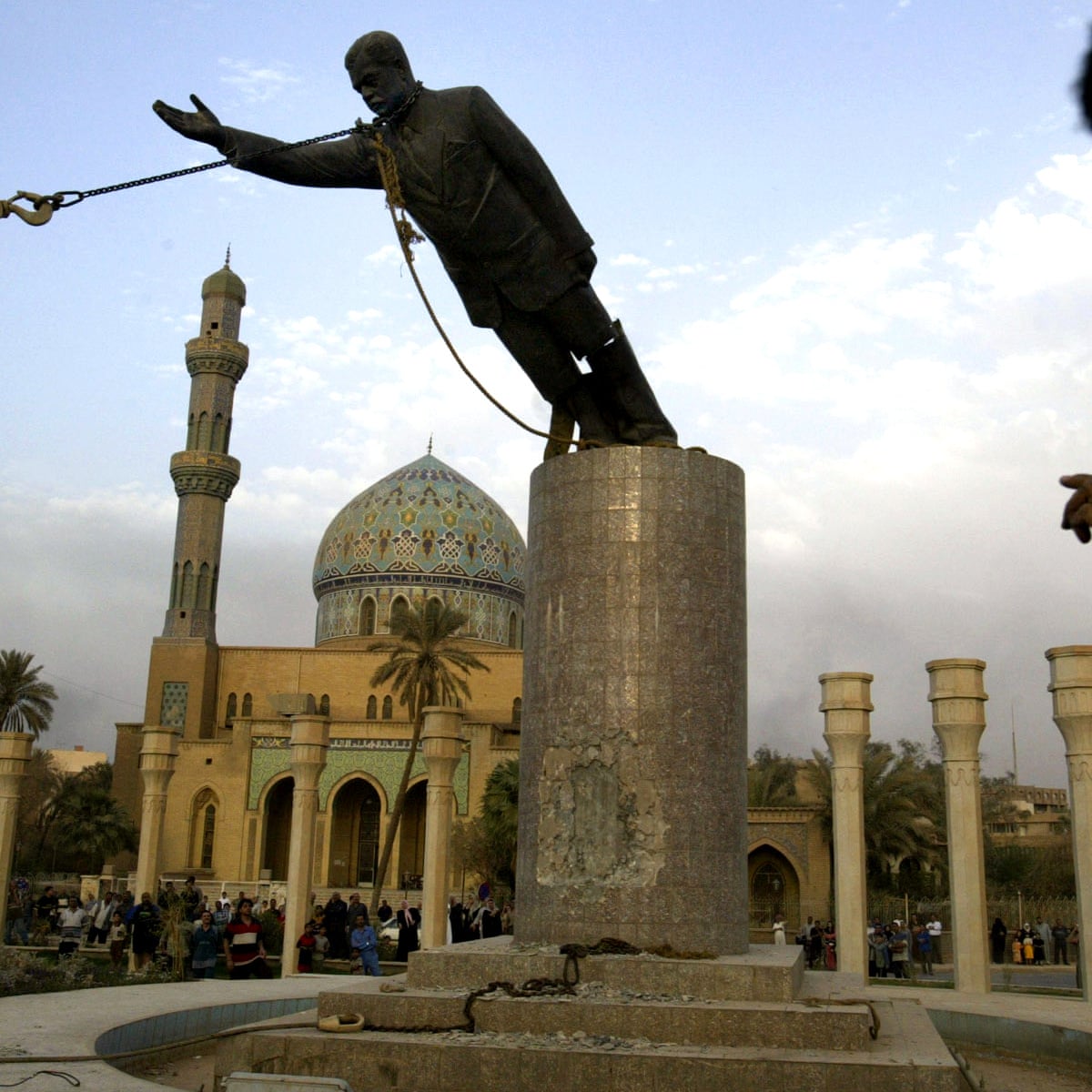
Iconic picture of Saddam's statue falling
Conclusion: A Regime in Decline
The deaths of Uday and Qusay Hussein marked the beginning of the end for Saddam’s inner circle. With his sons—key enforcers of fear and brutality—gone, the symbolic and operational backbone of the regime was visibly collapsing. Saddam’s grip on Iraq, already fractured, weakened further as his family’s presence vanished from the battlefield.
Keep the reader moving

If the invasion had been postponed to the next available window on June 18-20, the consequences would have...

The scale of the challenge was almost incomprehensible. In 1940, the entire American military establishment was built around...
Five programs. Conceived in the early 1970s. Fielded by the early 1980s. Proven in combat in 1991. Still...
Continue the mission
Get new dispatches, conflict drops, and collection launches delivered directly to your inbox.