

Why this dispatch matters
Discover the untold story behind one of the most daring military maneuvers of the Iraq War - the Thunder Run into Baghdad. This gripping blog post takes you inside the armored assault led by the U.S. Army’s 3rd Infantry Division, revealing how speed, strategy, and sheer bravery shattered Saddam Hussein’s regime.
Author note: Stories from the Tactically Acquired archive, built to connect military history, service identity, and collection discovery.
Introduction
In April 2003, a bold maneuver known as the Thunder Run catapulted U.S. forces into the heart of Baghdad and into military history. Conducted by the U.S. Army’s 3rd Infantry Division, this operation broke the back of Saddam Hussein’s regime and showcased the might and adaptability of modern armored warfare. What was initially designed as a probing maneuver turned into one of the most audacious armored strikes since World War II.
This article explores the planning, execution, and legacy of the Thunder Run through the lens of the soldiers who lived it, the families who waited at home, and the military historians who continue to study its impact. For service members, veterans, and military families, the Thunder Run remains a powerful example of American determination, innovation, and courage under fire.

A Bradley Fighting Vehicle from Company A, Task Force 1-64 Armor, attacks up Highway 8 into Baghdad on 5 April 2003
Setting the Stage: Operation Iraqi Freedom
Objectives of the Campaign
Operation Iraqi Freedom began on March 20, 2003, with a massive aerial bombardment - coined "shock and awe" designed to cripple Iraq’s leadership and military infrastructure. The primary objectives were to eliminate Saddam Hussein’s regime, dismantle Iraq’s alleged weapons of mass destruction program, and liberate the Iraqi people from authoritarian rule. Backed by a coalition of allied nations, U.S. forces aimed to conduct a swift and decisive campaign that would avoid the prolonged fighting seen in previous wars. Planners envisioned a lightning-fast ground assault, cutting through Iraq’s defensive layers and rapidly neutralizing resistance. Speed, precision, and coordination were the pillars of the campaign’s strategy, with the goal of minimizing coalition casualties while maximizing pressure on the regime.
Strategic Importance of Baghdad
Baghdad was not only Iraq’s capital, it was the epicenter of Saddam Hussein’s power, command, and propaganda apparatus. The city housed key ministries, military headquarters, and symbolic sites that embodied the regime’s authority. Coalition planners understood that capturing Baghdad quickly would strike a decisive psychological blow to the Iraqi leadership and population. Controlling the capital would disrupt command-and-control operations, sow confusion among Iraqi units, and signal the imminent end of the Baathist regime. Baghdad’s capture was both a military and political imperative - it would demonstrate to the world that the coalition had the capability and resolve to remove Saddam and reshape the Iraqi state.

3rd Infantry Division Shoulder Sleeve Insignia
Role of the 3rd Infantry Division
At the forefront of this high-stakes push was the 3rd Infantry Division (Mechanized), based at Fort Stewart, Georgia. Renowned for its mobility and firepower, the division spearheaded the ground offensive with precision and aggression. The 2nd Brigade Combat Team, under the leadership of Col. David Perkins, was tasked with leading the final assault into Baghdad. The unit was selected for its experience, discipline, and ability to operate under extreme pressure. Their mission was to breach Baghdad’s defenses, secure critical intersections, and deliver a knockout blow to the regime’s nerve center. As they advanced through cities like Najaf and Karbala, the 3rd ID faced sporadic resistance, but nothing prepared them for the bold maneuver they would soon undertake—what would become known as the Thunder Run.

1st Battalion, 64th Armored Regiment at Red Cloud tank range preparing for overseas deployment in May 2002 at Fort Stewart, Georgia
Concept and Planning: Birth of the Thunder Run
The Origins of the Thunder Run Concept
The Thunder Run concept was forged amid the uncertainty of urban warfare. As U.S. forces approached Baghdad in early April 2003, commanders recognized that a prolonged, block-by-block battle in the dense cityscape would be costly in both lives and time. To avoid this quagmire, senior Army leaders developed an aggressive alternative: a deep armored thrust straight into the heart of Baghdad. Rather than engage in static fighting, armored columns would charge along major highways, seize key intersections, and disrupt Iraqi command structures with shock and speed. Drawing lessons from Cold War-era maneuver warfare, the strategy banked on the psychological impact of overwhelming force—designed to paralyze defenders and collapse resistance before it could consolidate.
Key Leaders and Decision-Makers
This bold concept was championed by Col. David Perkins, commander of the 2nd Brigade Combat Team, and Col. William Grimsley of the 1st Brigade, both seasoned leaders with mechanized warfare expertise. Working closely with division commander Maj. Gen. Buford Blount, they crafted an operation that defied traditional urban combat doctrine. Their plan emphasized tempo, mobility, and initiative. The leadership team coordinated with logistics units, air support elements, and communications teams to ensure that the armored thrust would not stall once inside the city. The risk was enormous—if any part of the column became isolated or immobilized, they could be encircled and destroyed—but the potential payoff was equally historic.
Operational Objectives
The Thunder Run’s primary objective was to shatter the illusion that Baghdad was impenetrable. U.S. forces aimed to seize and hold three key intersections - nicknamed Moe, Larry, and Curly - to dominate the city’s road network and isolate Iraqi defenders. Simultaneously, the operation sought to capture symbolic government sites and disrupt command nodes. Beyond the physical terrain, the psychological terrain was equally important: by showing that American forces could reach the regime’s core with impunity, the Army hoped to demoralize enemy fighters, encourage mass surrenders, and hasten the regime’s collapse. The plan was simple in design but demanded complex execution under fire - requiring every soldier and leader to think fast, move decisively, and adapt in real time.

Brigade executive officer Lt. Col. Eric Wesley of 2nd Brigade, 3rd Infantry Division, leads the fight from a hasty tactical operations center
April 5: The First Thunder Run – A Reconnaissance in Force
Task Force 1-64 Armor
On the morning of April 5, 2003, Task Force 1-64 Armor launched what would become the first Thunder Run, an aggressive, high-speed armored raid from Baghdad International Airport into the city. Commanders designed this operation as a reconnaissance in force: a calculated push to test Iraqi defenses, gauge the enemy’s willingness and capacity to fight, and gather real-time intelligence on the terrain and resistance ahead. The force, composed of M1A1 Abrams tanks and M2 Bradley Fighting Vehicles, moved quickly along Highway 8 toward central Baghdad. Though initially intended as a temporary incursion, the sheer momentum and reach of the assault would signal a turning point in the campaign.
Initial Engagements and Lessons Learned
As the column advanced, it encountered fierce resistance from Iraqi troops, paramilitary fighters, and Fedayeen loyalists. Gunfire erupted from rooftops and alleyways, while rocket-propelled grenades streaked toward U.S. vehicles. Makeshift roadblocks, burning debris, and ambush points littered the route. Despite the intensity of the engagement, the armor-heavy task force pressed through the chaos, reaching the Republican Guard’s headquarters and penetrating deeper into the city than expected. While several vehicles were damaged and troops came under sustained attack, the unit managed to return to the airport largely intact. The operation proved that the Iraqi military lacked both the cohesion and firepower to stop a fast-moving, coordinated mechanized assault.
Preparing for the Main Assault
The first Thunder Run sent shockwaves through Iraqi command structures and stunned observers around the world. More importantly, it gave U.S. commanders a clear operational insight: Baghdad could be breached. The success emboldened coalition leadership to pivot quickly from cautious probing to a full-scale assault plan. Soldiers who had just returned from the April 5 raid began rearming, refueling, and preparing for what they knew would be an even more dangerous mission. Within 48 hours, the decision was made - the next Thunder Run would not stop.

Army Task Force 4-64, part of the 3rd Infantry Division, seizes a bridge as part of its campaign to move north toward Baghdad.
April 7: The Second Thunder Run – Into the Heart of Baghdad
Launch of the Main Assault
At dawn on April 7, 2003, the 2nd Brigade Combat Team of the 3rd Infantry Division launched the full-scale assault into central Baghdad. This was no longer a reconnaissance mission - was the main event. With roaring Abrams tanks in the lead, followed by Bradley Fighting Vehicles, Humvees, and logistical trucks, the column surged forward from Baghdad International Airport. The objective was to seize and hold key areas of the city, effectively demonstrating that Baghdad and the regime had fallen. Despite the risks, commanders believed that speed, overwhelming firepower, and audacity would disorient the enemy and allow U.S. forces to establish a foothold before Iraqi units could react.
Seizing Key Intersections: Moe, Larry, and Curly
The plan hinged on capturing and holding three critical intersections codenamed Moe, Larry, and Curly. These crossroads formed a strategic triangle that controlled movement through central Baghdad. Each was heavily contested. Iraqi fighters, including remnants of the Republican Guard, used rocket-propelled grenades, small arms, and even suicidal vehicle-borne IEDs in an attempt to halt the advance. Nevertheless, through disciplined fire coordination, aggressive maneuvering, and sheer force of will, U.S. forces secured all three intersections. Holding these chokepoints created the illusion of full American control, paralyzing Iraqi resistance and opening routes for reinforcements and resupply.
Urban Combat and Enemy Resistance
The streets of Baghdad turned into a maze of ambushes and close-quarters firefights. As the armored column advanced, it faced an onslaught of enemy resistance from rooftops, alleyways, and hidden bunkers. Iraqi forces fired from civilian vehicles and blended into the population, forcing U.S. troops to remain hyper-vigilant. Despite the intensity, the Americans pushed forward, coordinating suppressive fire with air support and artillery. Combat engineers cleared obstacles under fire, while medics treated wounded soldiers in real time. Every block won was a test of courage and discipline. By sunset, U.S. forces had carved a path deep into the city and held firm against counterattacks, proving that Baghdad was no longer under Saddam’s control.
 Soldiers from 2nd Brigade securing a critical intersection during the April 7 Thunder Run
Battlefield Challenges and Acts of Valor
Combat Under Fire
As Iraqi fighters swarmed the U.S. convoys with small arms fire, RPGs, and improvised explosives, the front lines quickly blurred. Soldiers traditionally assigned to non-combat roles - fuelers, medics, supply clerks, mechanics - were thrust into the heart of the fight. Without hesitation, these support troops grabbed M4 carbines, grenades, and sidearms to protect themselves and their fellow soldiers. In many cases, they held the line as tenaciously as frontline infantry. Convoys under fire became battlegrounds, and every soldier became a rifleman. Their resolve under intense pressure prevented ambushes from becoming disasters and saved countless lives.
Tactical Flexibility and Improvisation
In the chaos of urban combat, U.S. forces repeatedly demonstrated remarkable adaptability. When a supply convoy was pinned down by coordinated attacks, soldiers rapidly established a 360-degree defensive perimeter and coordinated with air support to suppress enemy fire. Elsewhere, a maintenance crew, operating under sustained attack, repaired disabled vehicles on the fly using limited tools and salvaged parts. In one case, a lone mechanic braved gunfire to hook up a smoldering Bradley Fighting Vehicle with a tow cable, dragging it out of a kill zone before its ammunition could detonate. Leadership, resourcefulness, and battlefield improvisation proved just as vital to mission success as armor and firepower.
Heroism and Sacrifice
Several soldiers were killed in action, including Sgt. First Class John W. Marshall and Spc. David Evans. Their courage under fire saved lives and helped ensure mission success.
Sgt. First Class John W. Marshall
Sgt. First Class John W. Marshall gave his life during the Thunder Run while serving as part of Task Force 1-64 Armor. A seasoned non-commissioned officer, Marshall was known for his leadership, discipline, and deep concern for the soldiers under his command. As the armored column pressed into Baghdad, he remained at the front, guiding his troops through hostile urban terrain under heavy fire. His actions helped maintain the formation’s momentum and morale during some of the battle’s most critical moments. He died shielding others, a selfless act that exemplified the warrior ethos. Marshall’s courage and sacrifice saved lives and contributed to the mission’s overall success. His memory lives on in the hearts of those he led and served beside.

SFC John W Marshall's grave at Arlington National Cemetery
Staff Sgt. Stevon A. Booker
Staff Sgt. Stevon A. Booker was a dedicated U.S. Army soldier from Apollo, Pennsylvania, who served with the 3rd Infantry Division’s Company A, 1st Battalion, 64th Armor Regiment. On April 5, 2003, during the pivotal "Thunder Run" into Baghdad, his platoon came under intense enemy fire. When his tank's machine gun malfunctioned, Booker exposed himself atop the tank to engage the enemy with his personal weapon, providing critical cover and communication for his unit over a five-mile advance. His actions were instrumental in the mission's success but led to his fatal wounding. Originally awarded the Silver Star, his valor was later recognized with a posthumous Distinguished Service Cross. In 2024, the U.S. Army honored his legacy by naming the M10 Booker Combat Vehicle after him, ensuring his bravery and sacrifice continue to inspire future generations
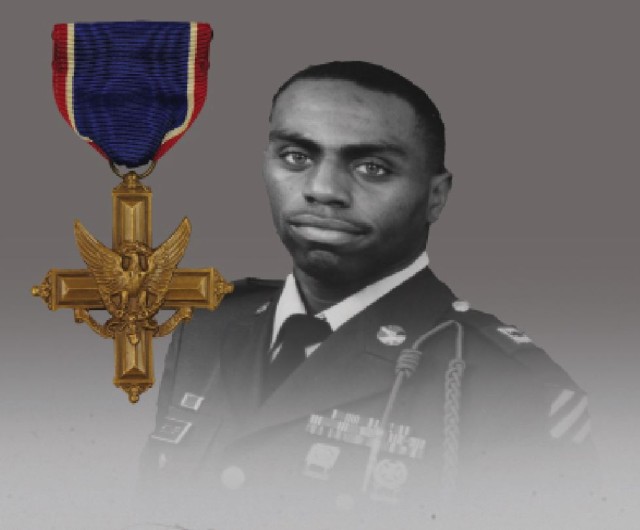 Staff Sgt. Stevon A. Booker was posthumously awarded the the Distinguished Service Cross - the nation's second highest award for valor - in 2019
Strategic Outcome and Aftermath
Breaking the Back of Iraqi Defenses
By the end of April 7, 2003, the success of the second Thunder Run signaled the effective collapse of Saddam Hussein’s regime. U.S. forces had seized control of central Baghdad, cutting off vital command and control nodes, and breaking the will of remaining Iraqi defenders. The audacious maneuver exposed the fragility of Saddam's military, revealing a force unprepared to counter fast-moving, heavily armored units that operated with tactical cohesion and overwhelming firepower. The psychological impact was immediate: many Iraqi fighters abandoned their posts, and resistance across the capital began to crumble. Within 48 hours, scenes of jubilant Iraqi civilians pulling down Saddam’s statue in Firdos Square were broadcast worldwide, marking a symbolic end to decades of authoritarian rule.
Media and Public Reaction
The Thunder Run unfolded in front of a global audience, thanks to embedded journalists traveling with frontline units. Footage of tanks rolling through Baghdad’s boulevards dominated the news, offering dramatic proof of American military prowess. Reports from journalists like the Washington Post's David Zucchino conveyed both the chaos and heroism of the operation, giving the public an intimate view of modern combat. Reactions were mixed, many Americans felt pride in the swift victory, while others questioned the long-term cost of the invasion. Nonetheless, the Thunder Run stood out as a defining image of the Iraq War: raw, rapid, and decisive.
Long-Term Impact on Military Doctrine
The Thunder Run reshaped U.S. Army doctrine on urban warfare and mechanized operations. It demonstrated that armored forces could be used not only for support or perimeter control but as the vanguard of deep urban penetration. Commanders began to reassess assumptions about the limitations of tanks in cities, recognizing the value of speed, surprise, and firepower in disrupting enemy plans. Military academies, including West Point and the Command and General Staff College, integrated the Thunder Run into case studies on maneuver warfare and mission command. The operation became a model for combining decentralized leadership, aggressive initiative, and integrated support to achieve outsized strategic effects. Its legacy continues to influence training and planning for future urban conflicts.
Thunder Run at 20: Remembrance and Legacy
West Point’s Mission Command Conference
In 2023, the U.S. Military Academy at West Point held a landmark conference to commemorate the 20th anniversary of the Thunder Run. The event brought together veterans, military scholars, and cadets for in-depth discussions about the operation’s enduring significance. Panels featured firsthand accounts from soldiers who led the charge into Baghdad, shedding light on the decision-making, improvisation, and resilience that defined the mission. Historians analyzed the Thunder Run as a turning point in modern mechanized warfare and explored its influence on U.S. Army doctrine, particularly the concept of rapid dominance. The conference served not only as a remembrance of a historic battle but also as a vital forum for passing its lessons on to future military leaders.
Veteran Reunions and Family Tributes
Across the country, members of Task Force 1-64 Armor and their families gathered to honor the legacy of their shared experience. At Fort Stewart and other military communities, ceremonies and reunions paid tribute to the fallen, including heartfelt speeches, video tributes, and the unveiling of commemorative plaques. Families of Sgt. First Class John W. Marshall and Spc. David Evans, among others, were recognized for their sacrifice. Veterans embraced old comrades, rekindling the bond forged under fire in the streets of Baghdad. These gatherings not only provided healing but reaffirmed a profound sense of duty, brotherhood, and memory that time cannot erode.
Lessons for Future Generations
The Thunder Run is now a fixture in military education, studied in war colleges, officer courses, and leadership seminars. Cadets at West Point and other institutions dissect the operation to understand the complexities of urban warfare, the importance of decentralized command, and the critical role of initiative at every level. Instructors emphasize how bold decision-making, trust among units, and adaptive leadership turned a high-risk gamble into a decisive victory. For today’s junior officers, the Thunder Run is more than history, it’s a blueprint for how courage, speed, and cohesion can win battles and change the course of a war.

Veterans of 1st Battalion, 64th Armor Regiment “Desert Rogues,” 2nd Brigade Combat Team, 3rd Infantry Division gather for the 10th anniversary of the Thunder Runs.
Personal Stories from the Front
Soldiers’ Perspectives
For the soldiers who took part in the Thunder Run, the experience was a defining crucible of chaos, courage, and camaraderie. Amid the deafening roar of tank engines, bursts of gunfire, and searing heat, they fought through Baghdad’s streets with precision and grit, relying on training and trust in one another. Some recalled the surreal quiet that followed each engagement, while others remembered moments of humanity, sharing water, tending to the wounded, or exchanging glances of resolve. The battle was more than a mission; it was a test of will that forged unbreakable bonds and etched lasting memories. Despite the danger, they understood the gravity of their charge, pressing forward as both warriors and witnesses to a moment that would shape history.
Family Experiences Back Home
While soldiers braved the chaos of Baghdad, their families lived through a different kind of battle back home—one of silence, anxiety, and waiting. News coverage offered only fragments of the reality on the ground, and many family members didn't know their loved ones were part of the Thunder Run until days later. Wives, husbands, parents, and children clung to every news update, scanning footage for a familiar face or unit patch. For some, the phone call or letter confirming survival came quickly; for others, it never came. The families of Sgt. First Class John W. Marshall and Spc. David Evans received the news no one wants to hear, yet stood with pride at memorial ceremonies honoring their loved ones. Even two decades later, these families remain bonded by shared sacrifice and the profound understanding that their service members were part of something historic. The home front bore its own scars, but it also became a pillar of strength and resilience in the Thunder Run's legacy.
Conclusion: Courage That Changed History
The Thunder Run into Baghdad was more than just a bold military maneuver, it was a pivotal moment in modern warfare that demonstrated the raw power of speed, audacity, and tactical precision. It marked the collapse of Saddam Hussein’s regime and showcased how a relatively small, highly mobile force could achieve strategic objectives that once required weeks or months of siege warfare. For the soldiers of the 2nd Brigade Combat Team, 3rd Infantry Division, it was a crucible of courage, where every mile was earned through grit, improvisation, and unbreakable camaraderie under fire.
The operation rewrote doctrines and left an indelible mark on military strategy. It revealed the potential and the limits of mechanized warfare in urban environments and emphasized the importance of leadership, adaptability, and joint-force coordination. More importantly, it highlighted the humanity behind the hardware: the soldiers who fought not only with weapons, but with heart and resolve. Their sacrifices, those who gave their lives, those who were wounded, and those who still carry the memories remain a powerful reminder of the cost of war and the valor it demands.
Two decades later, the Thunder Run continues to be studied in war colleges and remembered at veterans’ reunions. Its legacy lives on in the doctrines that shape future operations and in the lives of those it touched. It is a story of victory, loss, and heroism, a testament to the bravery of those who dared to drive straight into the heart of an enemy stronghold, and in doing so, helped change the course of history.

Keep the reader moving

If the invasion had been postponed to the next available window on June 18-20, the consequences would have...

The scale of the challenge was almost incomprehensible. In 1940, the entire American military establishment was built around...
Five programs. Conceived in the early 1970s. Fielded by the early 1980s. Proven in combat in 1991. Still...
Continue the mission
Get new dispatches, conflict drops, and collection launches delivered directly to your inbox.
4 Comments
After action discussion - moderated before publication.
Very cool to see some of what my dad did when be deployed in 2003. The 2nd tank is now at Ft. Stewart.
True bravery was shown by all participants.
Extremely interesting read.
Extremely interesting read.