

Why this dispatch matters
In one of the Iraq War’s earliest and fiercest urban battles, U.S. forces from the 82nd Airborne Division and 3rd Infantry Division clashed with determined Fedayeen and Ba’athist fighters in the southern city of Samawah. What began as a bypass operation to keep supply lines open quickly escalated into days of brutal street fighting, sniper attacks, and nighttime firefights. With key bridges, industrial zones, and civilian areas all in play, American paratroopers and mechanized infantry battled not just entrenched enemies but also the chaos of urban warfare—foreshadowing the conflicts that would define the war's later years.
Author note: Stories from the Tactically Acquired archive, built to connect military history, service identity, and collection discovery.
Opening the Southern Corridor: Introduction
In the opening days of Operation Iraqi Freedom, the U.S. military launched a massive push north from Kuwait with the ultimate objective of reaching and capturing Baghdad. The operation relied heavily on speed, mobility, and shock—an approach dubbed “shock and awe”—to disorient Iraqi defenders and collapse the regime before it could regroup. While the main axis of advance was spearheaded by units of the 3rd Infantry Division, securing the lines of communication and supply behind the front lines was equally vital to the invasion’s success.
One of the first major obstacles in this push was the city of Samawah, a dusty Euphrates River town situated along Highway 8, a critical route linking Kuwait to Baghdad. The city’s location—centered around two key bridges over the Euphrates and near vital road junctions—made it a natural choke point. Although not as large or well-fortified as cities like Basra or Nasiriyah, Samawah quickly emerged as a flashpoint due to its geography and unexpected levels of resistance.
Initial U.S. expectations were that Samawah would be a minor delay, if any. Intelligence suggested minimal Iraqi army presence, and the main threat was believed to be small pockets of Ba’ath loyalists. However, those assumptions proved dangerously optimistic. As paratroopers and mechanized infantry approached, they encountered entrenched Fedayeen Saddam fighters, Ba’ath Party irregulars, and well-prepared ambushes in the industrial outskirts of the city.
What followed was an intense, multi-day battle involving elements of the 82nd Airborne Division and the 3rd Infantry Division, marked by urban combat, river crossings under fire, and house-to-house fighting. Despite being overshadowed by higher-profile battles in Baghdad and Basra, the Battle of Samawah played a crucial role in securing the southern corridor and exposing the tenacity of Iraq’s paramilitary resistance.
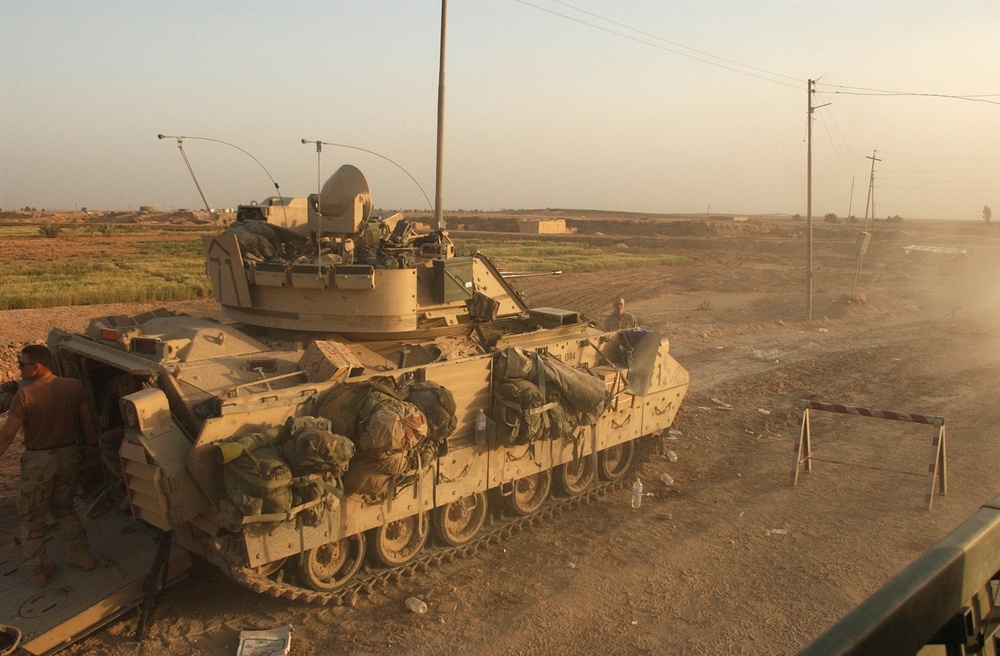 A Bradley fighting vehicle from 3rd Infantry Division is positioned near Samawa
Securing the Route: First Moves Around Samawah
Arrival of U.S. Forces
In the final days of March 2003, elements of the 3rd Infantry Division and the 82nd Airborne Division advanced into the vicinity of Samawah, a city that U.S. planners had initially expected to bypass. The 3rd Infantry Division, led by its 2nd Brigade Combat Team (BCT), was executing a lightning-fast armored thrust toward Baghdad, while the 82nd Airborne Division’s 2nd Brigade had the parallel mission of securing the division’s long and vulnerable supply lines.
As the 3rd ID pushed north, paratroopers from the 82nd began arriving in and around Samawah with orders to contain enemy fighters in the area and prevent disruptions to logistics. The 82nd’s role was not to take the city outright, but to neutralize hostile forces capable of threatening U.S. convoys and maintain control of Highway 8, the critical lifeline to Baghdad.
The Strategic Dilemma: Bypass or Engage?
Initial operational plans called for bypassing Samawah to avoid becoming bogged down in urban combat. Commanders viewed the city as a secondary objective and hoped to contain it without committing large numbers of troops. However, it soon became clear that Fedayeen Saddam fighters, fanatical paramilitary units loyal to Saddam Hussein, were operating inside and around the city in significant numbers. These irregulars used civilian infrastructure as cover, ambushed U.S. patrols, and sought to disrupt supply routes by targeting soft-skinned convoys.
The terrain around Samawah, including rail yards, industrial zones, and riverbanks, provided ample cover for ambushes and sniper attacks. These factors quickly elevated Samawah from a tactical nuisance to a strategic threat that had to be addressed directly.
Intelligence Reports and Threat Assessment
As U.S. forces established positions around the city, intelligence began filtering in from both aerial reconnaissance and local sources. Reports indicated that Fedayeen fighters had fortified key buildings, particularly around the cement factory and train station, which became focal points of resistance. Ba’ath Party loyalists were also believed to be coordinating sniper teams and small-unit ambushes throughout the industrial sector.
Enemy fighters, often dressed in civilian clothing, blended with the population, complicating rules of engagement and slowing efforts to root them out. Commanders from the 82nd Airborne described the enemy’s tactics as ruthless and unpredictable, using suicide attacks and human shields in hopes of stalling American forces.
Faced with growing threats and an increasingly complex urban environment, commanders from both divisions began planning more aggressive operations to suppress enemy activity, culminating in what would become a prolonged and gritty engagement.
 82nd Airborne Division Paratroopers clearing the city door to door
Urban Warfare Begins
The Fight for the Cement Factory
As the 82nd Airborne Division prepared to contain Samawah, combat intensified in the city's industrial outskirts—particularly around the large cement factory on the southeast edge of town. This sprawling facility became the first major objective for U.S. forces due to intelligence indicating it was being used as a staging area for Fedayeen Saddam fighters and Ba’athist loyalists.
On March 30, 2003, soldiers from the 82nd Airborne’s 2nd Battalion, 325th Airborne Infantry Regiment launched a coordinated assault to clear the factory. They encountered immediate resistance: Iraqi fighters had fortified the factory buildings and surrounding areas with RPG teams, machine guns, and snipers. As troops closed in, the defenders engaged in hit-and-run tactics, firing from concealed positions before retreating into alleyways or nearby structures.
The factory itself was a labyrinth of towering silos, catwalks, and machinery, complicating movement and increasing the risk of ambushes. Still, paratroopers fought through, using grenades, suppressive fire, and close-quarters maneuvering to eliminate pockets of resistance.
Skirmishes on the Industrial Perimeter
Outside the factory, firefights erupted across the rail yards, warehouses, and road junctions that made up Samawah’s industrial belt. The enemy used civilian buildings for cover, launching RPGs and small-arms fire at American troops from windows and rooftops. The Fedayeen fighters avoided direct confrontation, preferring to ambush from the shadows and slip away before air or artillery support could respond.
Despite the asymmetric tactics, U.S. forces gradually gained the upper hand by maintaining momentum and applying overwhelming firepower. Armored vehicles from the 3rd Infantry Division supported airborne troops when possible, and artillery batteries provided suppressive fire to soften enemy strongholds.
Night Operations and Illumination Fire
Combat in Samawah didn’t stop when the sun went down. U.S. forces relied on night vision technology and artillery-delivered illumination rounds to keep up pressure through the night. These star shells lit the city in eerie flashes as firefights crackled across rooftops and alleyways.
The illumination not only gave U.S. forces visibility—it sent a clear message to the defenders: American troops were not backing down and would fight on any terrain, at any hour.
 The first sergeant for Company B, 2nd Battalion, 325th Airborne Infantry Regiment, 82nd Airborne Division, prepares his equipment before the start of an early-morning assault near Samawa
Heroes in the Fight
Staff Sgt. Gerald A. Wolford: Relentless Leadership Under Fire
In the intense fighting of Samawah, Staff Sgt. Gerald A. Wolford, assigned to Company B, 1st Battalion, 325th Airborne Infantry Regiment (1-325th AIR) of the 82nd Airborne Division, distinguished himself with unwavering bravery and tactical leadership.
On March 30, 2003, Wolford led his squad during a high-risk urban assault to clear a building occupied by entrenched enemy fighters. Under heavy small-arms and RPG fire, Wolford maneuvered his squad into position and personally eliminated an enemy combatant threatening their advance.
As his team moved forward, one of his soldiers was hit by enemy fire. Despite the danger, Wolford ran through the open kill zone to reach the wounded paratrooper. He dragged the injured man to safety, all while still under effective enemy fire. His ability to lead by example under extreme conditions, repeatedly risking his life to save others, proved critical to the squad’s success and survival. For his gallantry, he was awarded the Silver Star, the third-highest U.S. military combat decoration for valor.

Staff Sgt. Gerald A. Wolford receives Silver Star
Unnamed Acts of Valor
Beyond those formally recognized, multiple unnamed paratroopers from the 82nd Airborne performed acts of heroism that were captured in interviews, media coverage, and after-action reports. Some rescued civilians trapped in the crossfire. Others repelled ambushes or continued fighting while wounded. These stories, though less documented, speak to the grit and courage of the entire brigade in a battle that tested them physically and morally.
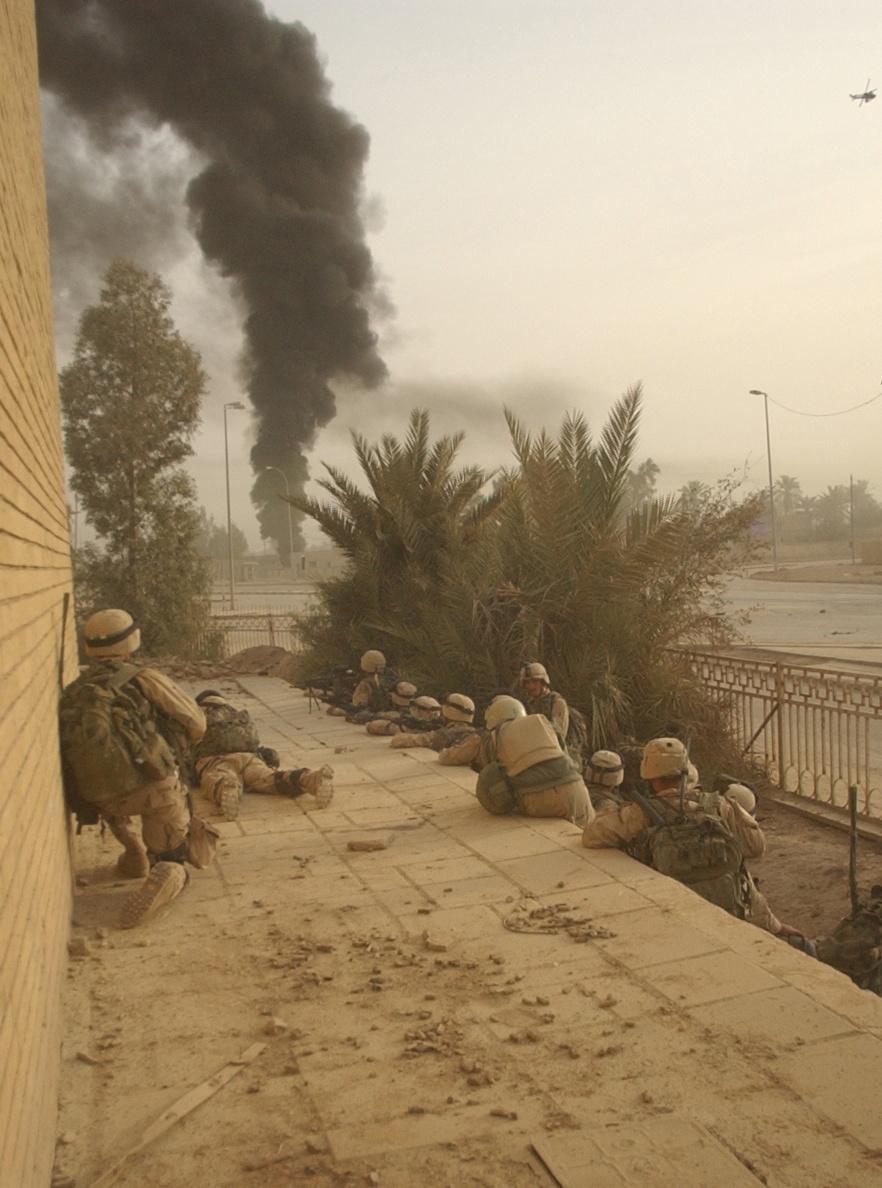 Soldiers from Company B, 2nd Battalion, 325th Airborne Infantry Regiment, 82nd Airborne Division, watch an Iraqi paramilitary unit's headquarters at As Samawa, Iraq burn
The Fight for the Bridges
The Battle of Samawah revolved around control of two key bridges spanning the Euphrates River—vital choke points for both tactical advantage and maintaining U.S. supply routes toward Baghdad. Iraqi forces, including Fedayeen and Ba'athist loyalists, turned the crossing points into fortified death traps, forcing American units into sustained combat over several days and nights.
Twin Bridges Under Fire
The Highway 8 bridge and a pedestrian railroad bridge just to its north became focal points of the conflict. Both served as critical connectors between the western and eastern sides of Samawah. Iraqi fighters, embedded in surrounding buildings and sandbagged positions, launched relentless rocket-propelled grenade (RPG) attacks and machine gun fire against any U.S. movement near the spans.
According to The Guardian and eyewitness accounts, Iraqi defenders refused to retreat, often remaining concealed until U.S. forces came within close range. These tactics inflicted injuries and damage even as American forces brought superior firepower.
Combined Arms Response
To hold and eventually control the bridges, U.S. commanders deployed a combination of infantry from the 82nd Airborne Division, armor elements from the 3rd Infantry Division, and snipers positioned in elevated buildings. The use of M1 Abrams tanks and Bradley Fighting Vehicles proved crucial in absorbing RPG strikes and suppressing entrenched fighters.
The DVIDS interview “Cool, Man. We Were There” describes nighttime firefights where artillery shells delivered illumination rounds, lighting up the battlefield for snipers and infantry to advance under visibility. Despite the challenge of fighting in a civilian-dense environment, paratroopers from 1-325th AIR used suppressive fire and close-quarters tactics to clear houses near the bridgeheads.
Attrition and Determination
The battle for the bridges did not resolve in a single engagement. Over the course of several nights, U.S. troops had to retake contested ground, sometimes multiple times, as Iraqi fighters regrouped and returned. As one account put it, the Americans were surprised by the "fanatical" resistance, which far exceeded pre-invasion intelligence estimates.
Ultimately, persistent pressure and coordinated operations allowed the U.S. to secure both spans. This paved the way for supply lines to remain open and allowed follow-on forces to bypass the bulk of the city, achieving the broader operational objective.
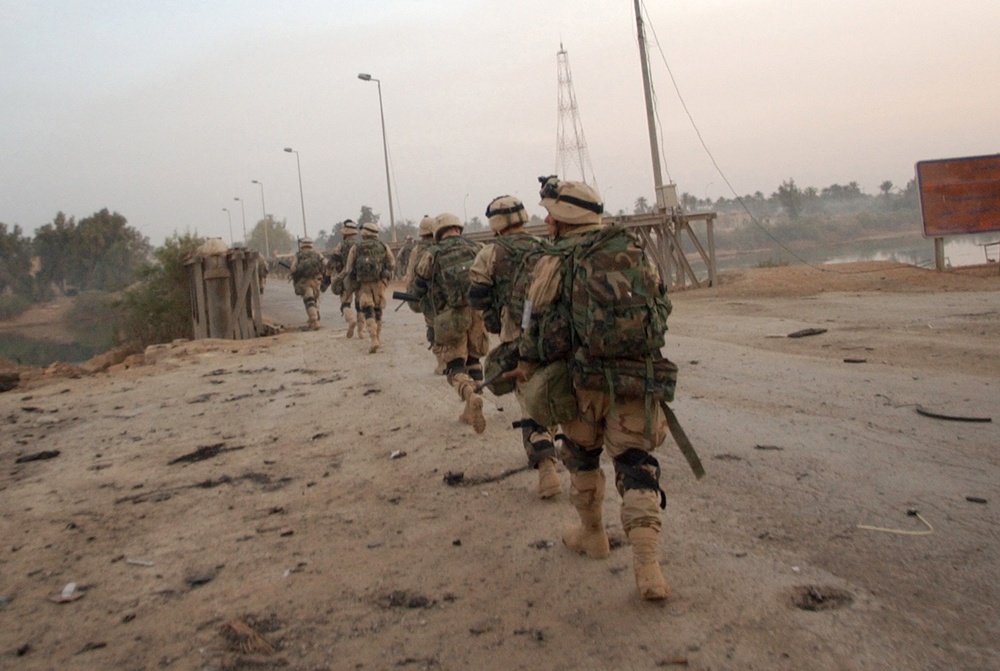 Soldiers from Company B, 2nd Battalion, 325th Airborne Infantry Regiment, 82nd Airborne Division, run across the Euphrates River
Cement Factory and Industrial Combat
As U.S. forces pressed deeper into Samawah, one of the most intense and prolonged engagements occurred at the Saddam Cement Plant, a sprawling industrial complex on the city’s outskirts. Iraqi Fedayeen fighters and Ba'athist loyalists had fortified the site, turning it into a maze of defensive positions, underground bunkers, and elevated firing points that challenged American attempts to clear and secure the area.
A Fortress of Concrete and Concealment
According to The Guardian and accounts from veterans interviewed by DVIDS and in after-action discussions, the cement plant became a major stronghold for Iraqi resistance. The facility’s multiple levels, thick concrete walls, and pre-existing underground bunkers and tunnels allowed defenders to withstand heavy bombardment and move unseen between positions.
Fedayeen forces used the plant’s industrial infrastructure to their advantage, staging ambushes and hit-and-run attacks from concealed locations, often slipping through underground passages to flank or retreat under cover.
Close-Quarters Combat and Chaos
U.S. paratroopers from the 1st Battalion, 325th Airborne Infantry Regiment (1-325th AIR) of the 82nd Airborne Division were among those tasked with clearing the area. The battle unfolded at close quarters, with mortar fire, grenades, and intense small-arms exchanges echoing through the concrete corridors and open loading yards.
As described in “Cool, Man. We Were There” and The Washington Post’s feature “The Bridge at Samawah,” the urban setting nullified many of the advantages American forces typically held in open terrain. Troops had to fight room-to-room, using disciplined fire control and hand grenades to dislodge determined defenders. Some Iraqi fighters refused to surrender, choosing to fight until killed or forced to flee.
Coordination Amid Confusion
Despite the intensity of the engagement, coordination between infantry, snipers, and supporting armor helped gradually push Fedayeen forces back. Bradley Fighting Vehicles and Abrams tanks were used to isolate portions of the plant, while 82nd Airborne squads maneuvered through debris-littered hallways, often under fire from multiple angles.
Flares and artillery illumination were again used at night to allow American forces to operate with limited visibility in a highly complex environment. The prolonged nature of the battle—spanning multiple days—made the cement plant one of the most heavily contested locations in the fight for Samawah.

82nd Airborne Division soldiers operate from a make shift machine gun nest
Human Toll and Aftermath
The Battle of Samawah, while a tactical success for U.S. forces, came at a human cost. The chaotic and close-quarters nature of the fighting, particularly around the cement plant and the Euphrates bridges, resulted in casualties on both sides—among American paratroopers, Iraqi combatants, and civilians caught in the crossfire.
Casualties Among Paratroopers and Iraqi Fighters
Elements of the 82nd Airborne Division, specifically the 1st Battalion, 325th Airborne Infantry Regiment, sustained casualties during prolonged fighting with entrenched Iraqi forces. According to reports from DVIDS and the veteran memoir “Cool, Man. We Were There,” units engaged in house-to-house combat and were frequently subjected to sniper fire, mortars, and ambushes using rocket-propelled grenades (RPGs).
While the exact number of U.S. wounded or killed during the battle was not publicly detailed in early coverage, The Guardian confirmed intense street fighting and noted that multiple American soldiers were reported injured over several days of combat.
Iraqi losses were heavier. Many Fedayeen fighters fought to the death, and estimates suggest dozens of defenders were killed during clearing operations in the cement plant and around the Euphrates bridges.
Use of Human Shields
One of the more troubling aspects of the battle, as described in The Washington Post’s “The Bridge at Samawah” and corroborated in after-action interviews, was the reported use of human shields by Iraqi forces. U.S. troops recounted civilians being forced into buildings or across combat zones to deter American attacks. This tactic complicated urban engagements and increased the risk to non-combatants during firefights.
Paratroopers exercising restraint in firepower—particularly when civilians were visible near combatants—highlighted the challenge of fighting an enemy embedded within a civilian population.
Torture Chambers and Bunkers Discovered
After the cement plant and other key positions were secured, U.S. forces began to explore the full extent of the Fedayeen’s fortified defenses. According to the archived personal account from a paratrooper on surfree.com, makeshift detention rooms and signs of torture were discovered in the underground facilities. One room, referred to by soldiers as a “torture chamber,” included bloodstained walls, restraining implements, and signs of prolonged abuse.
Beneath the cement plant and other buildings, troops also uncovered extensive tunnel networks and storage bunkers, filled with weapons, food caches, and propaganda materials. These discoveries reinforced the intelligence that Samawah had been an organized hub of Ba'athist and Fedayeen resistance in the early days of the war.
 A soldier with the 82nd Airborne Division steadies his rifle on an Iraqi vehicle
Combatant Forces in the Battle of Samawah
The Battle of Samawah involved a mix of highly mobile U.S. Army airborne and mechanized infantry units facing off against entrenched and irregular Iraqi forces determined to delay the American advance. The clash highlighted the complexity of urban warfare, with American precision and combined arms coordination pitted against fanatical resistance by Saddam loyalists.
U.S. Forces
1st Battalion, 325th Airborne Infantry Regiment (82nd Airborne Division)
The 1-325th AIR, part of the 2nd Brigade Combat Team of the 82nd Airborne Division, played a leading role in clearing the city. This light infantry unit, trained for rapid deployment and urban assault, conducted block-by-block clearing operations through Samawah’s industrial sector and cement factory complex. According to DVIDS and Army.mil, the battalion operated under extremely close-quarters conditions, with frequent use of grenades, room entries, and sniper support.
3rd Battalion, 7th Infantry Regiment (3rd Infantry Division)
3-7 Infantry supported the containment of Samawah and the push toward Baghdad by securing bridgeheads and suppressing enemy positions with Bradley Fighting Vehicles.
Supporting Mechanized and Armor Units
Additional firepower and mobility were provided by elements of the 1st Battalion, 41st Infantry Regiment, 2nd Battalion, 70th Armor Regiment, and 3rd Platoon of the 59th Chemical Company. These units contributed M2 Bradley's, M1A1 Abrams tanks, and WMD site assessment capabilities, reinforcing both the direct combat effort and the post-battle exploitation of enemy infrastructure.

Bradley fighting vehicle from 1/41st Infantry Regiment Mechanized breaches a wall
Opposing Forces
Fedayeen Saddam
The primary opposing force in Samawah was the Fedayeen Saddam, an irregular paramilitary group fiercely loyal to Saddam Hussein. Known for their black uniforms and fanatic resistance, Fedayeen units utilized RPGs, machine guns, and sniper rifles while defending urban positions. They fought from fortified buildings, underground bunkers, and tunnel networks, particularly around the cement plant.
The Guardian and Wikipedia describe their use of human shields and nighttime ambushes, tactics meant to slow and inflict casualties on U.S. forces. Some Fedayeen were reportedly local recruits, while others were bussed in from other parts of Iraq.
Ba’ath Party Loyalists
Local Ba’athist militias and intelligence agents supplemented the Fedayeen defense. These fighters, often less formally trained but ideologically committed, contributed to irregular engagements throughout the city. They reportedly helped organize defenses in residential areas, often blending in with the civilian population.
Elements of the Republican Guard
While no full Republican Guard units were deployed in Samawah, intelligence and veteran accounts suggest that individual officers or advisors from Republican Guard formations may have been embedded with local units. Their role appears to have been in coordinating defenses and reinforcing command-and-control structures.
 82nd Airborne Shirt from Tactically Acquired
Legacy and Lessons
Urban Warfare as a Harbinger
The Battle of Samawah, though lesser known than later engagements like Fallujah or Najaf, served as a critical preview of the brutal, close-quarters urban warfare that would become a defining feature of the Iraq War. In Samawah, U.S. forces confronted an entrenched enemy using asymmetric tactics, including RPG ambushes, underground bunkers, and civilian shields. These challenges required flexible responses and unit-level initiative—skills that would prove vital in Iraq’s escalating urban conflicts.
Non-Linear Battles and Tactical Innovation
Strategically, Samawah highlighted the complexities of non-linear warfare. U.S. planners initially intended to bypass the city, focusing instead on the push to Baghdad. However, stiff resistance and the city’s control over key Euphrates bridges forced commanders to shift to a containment and engagement strategy. This reactive, adaptive approach demonstrated the necessity of maneuver warfare, where logistics corridors and enemy strongholds could not always be neatly avoided.
Enduring Unit Valor and Sacrifice
The actions of the 1st Battalion, 325th Airborne Infantry Regiment (82nd Airborne Division) and the 3rd Battalion, 7th Infantry Regiment (3rd Infantry Division) revealed the extraordinary bravery and discipline of America’s front-line troops. From firefights at the cement plant to rooftop charges under fire, individual and collective heroism shaped the battle’s outcome. These units earned enduring respect not just for their tactical success, but for their ability to persevere through adversity in an unpredictable combat environment.
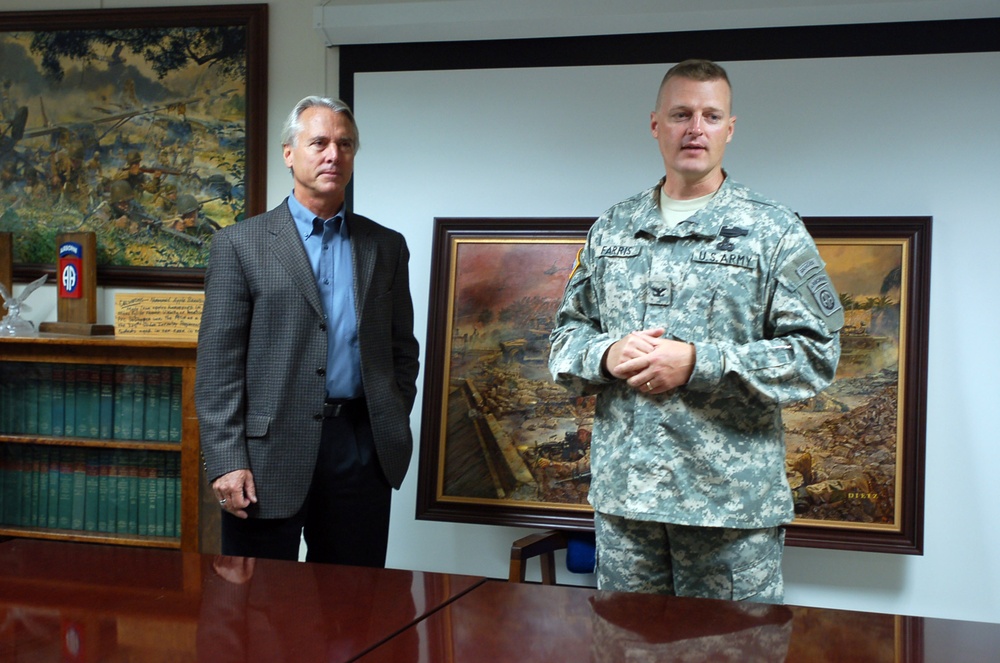 Artist James Dietz listens as Col. B. Don Farris, commander of the 2nd Brigade Combat Team, 82nd Airborne Division, speaks about Dietz’s painting Bridges of Freedom: Task Force Falcon Liberates As Samawah. The artwork captures the 2nd Brigade paratroopers in action during the 2003 battle in Samawah, Iraq
Conclusion
Though it received limited coverage at the time, the Battle of Samawah played a pivotal role in Operation Iraqi Freedom’s southern advance. It delayed enemy reinforcements, exposed the challenges of urban combat early in the campaign, and served as a proving ground for American troops tasked with holding ground, saving lives, and defeating a determined enemy in unfamiliar terrain.
The bravery of paratroopers like Staff Sgt. Gerald A. Wolford and Staff Sgt. Joseph R. Perez, alongside countless unnamed soldiers and medics, underscored the courage and cohesion that carried U.S. forces through some of the Iraq War’s most intense engagements. Samawah stands as a testament to tactical grit—an early fight in a long war where victory was earned inch by inch, building by building.
This battle, like many others in 2003, reminds us that the Iraq War’s early days were defined by swift advances but also by hard-won engagements fought away from the headlines. These moments, marked by sacrifice and valor, continue to shape the legacy of those who served.
Keep the reader moving

If the invasion had been postponed to the next available window on June 18-20, the consequences would have...

The scale of the challenge was almost incomprehensible. In 1940, the entire American military establishment was built around...
Five programs. Conceived in the early 1970s. Fielded by the early 1980s. Proven in combat in 1991. Still...
Continue the mission
Get new dispatches, conflict drops, and collection launches delivered directly to your inbox.