EST 13 OCT 1775
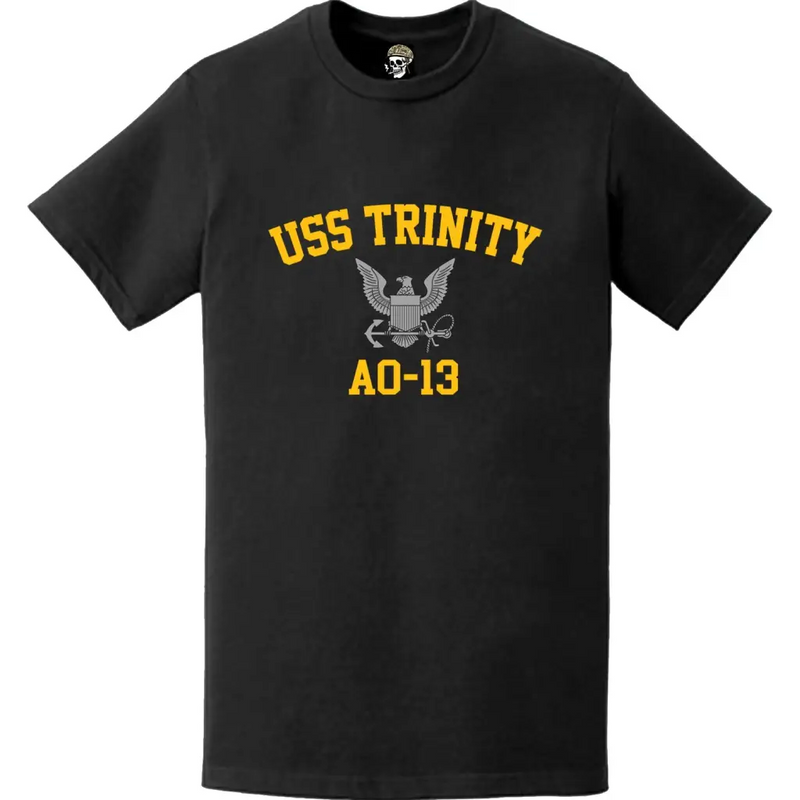
USS Trinity (AO-13)
"Semper Fortis"
USS Trinity (AO-13) played a critical and unheralded role in the United States Navy during the interwar period and World War II. The Patoka-class replenishment oiler's detailed service history underscores the importance of logistics and fuel transport in naval warfare.
Following the end of World War II, the Trinity's service continued in support of the occupation forces in the Pacific. However, as with many vessels that served through both world wars, the demands of peace and a focus on newer ship designs eventually led to her decommissioning.
The Trinity was decommissioned at an unspecified date post-war, and her name was struck from the Naval Vessel Register. Though her specific fate isn't outlined in the provided information, ships of her age and class were often sold for scrapping or used for target practice.
USS Trinity's history highlights the complexity of naval logistics and the critical role that auxiliary ships play in maintaining naval operations at sea. From her early voyages in the Mediterranean to her support of the United States Asiatic Fleet during World War II, the Trinity's ability to provide fuel to a wide variety of locations enabled the continued operations of the U.S. Navy's combatant vessels.
Her escape from Manila at the onset of the Pacific War, participation in varied operations in the South Pacific, Middle East, and throughout the Pacific theater, illustrates the demanding and sometimes perilous nature of logistics operations during wartime. USS Trinity's story is a testament to the behind-the-scenes work that makes frontline naval actions possible, emphasizing the fundamental importance of supply and logistics in modern warfare.