EST 13 OCT 1775
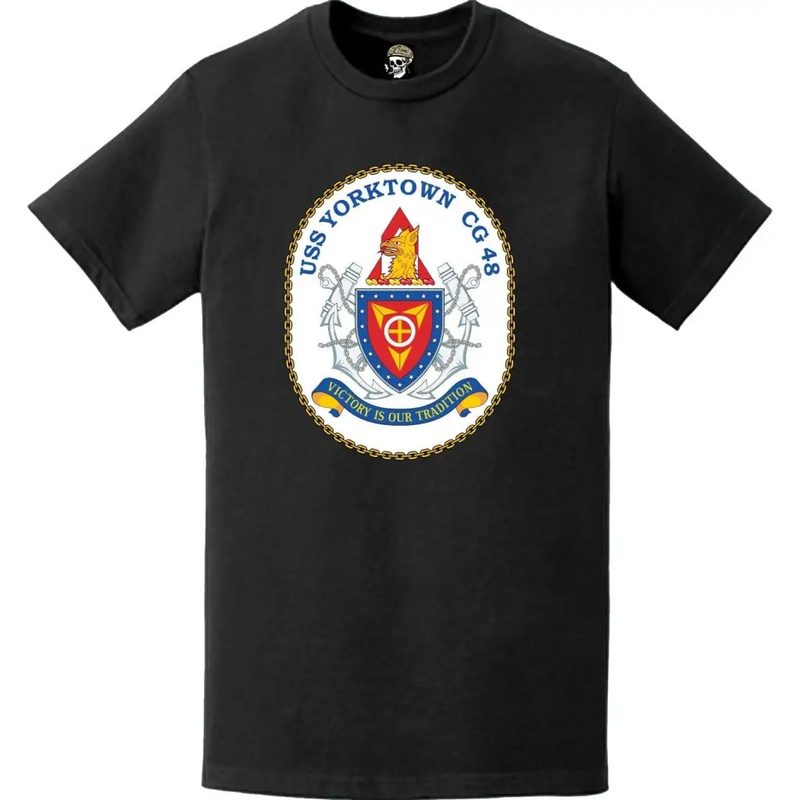
USS Yorktown (CG-48)
"Semper Fortis"
USS Yorktown (CG-48): When the Network Went Down
Commissioned on 4 July 1984, USS Yorktown carried one of the most storied names in American naval history. Three previous ships named Yorktown had defined carrier warfare in the Pacific: CV-5 was sunk at Midway in 1942; CV-10 fought from the Solomons through Tokyo Bay; CV-12 served from 1968 to 1970. The Aegis cruiser CG-48 was the fourth ship to carry the name of the Virginia battlefield where Cornwallis surrendered in 1781 and gave America its independence.
Yorktown served as a Cold War and post-Cold War surface combatant, deploying to the Mediterranean and Persian Gulf through the late 1980s and 1990s. But the incident that defined her public legacy was not a combat engagement. On 24 September 1997, while operating in the Atlantic off Cape Charles, Virginia, a crew member entered a zero into a database field that should never have accepted zero. A divide-by-zero error cascaded through the ship's Integrated Condition Assessment System , a Windows NT-based network managing the propulsion controls , and brought the entire system down. Both propeller shafts went dead. Yorktown sat powerless in the Atlantic for nearly three hours before engineers bypassed the failed network and restored power.
The incident made naval engineering history as a case study in the vulnerability of networked ship systems and the danger of software monoculture aboard a warship. The Navy used Yorktown's failure to drive changes in how it designed and segregated shipboard networks. Every subsequent discussion of cybersecurity in naval architecture references what happened to Yorktown that day.
She was decommissioned on 29 December 2004. Named for three carriers that changed the Pacific War, remembered for a software crash that changed naval engineering. Both parts of that story matter.
Tactically Acquired's USS Yorktown (CG-48) collection honors the crew who served aboard her , and the engineers who brought her back online on a dead Atlantic morning.