
ENABLE AUDIO
This experience includes mission control audio. Click anywhere to enable audio.
STS-51-L
28 JANUARY 1986
AMBIENT
73
SECONDS
USCGC DALLAS - WHEC-716
28 JANUARY - 29 AUGUST 1986
SCROLL TO BEGIN
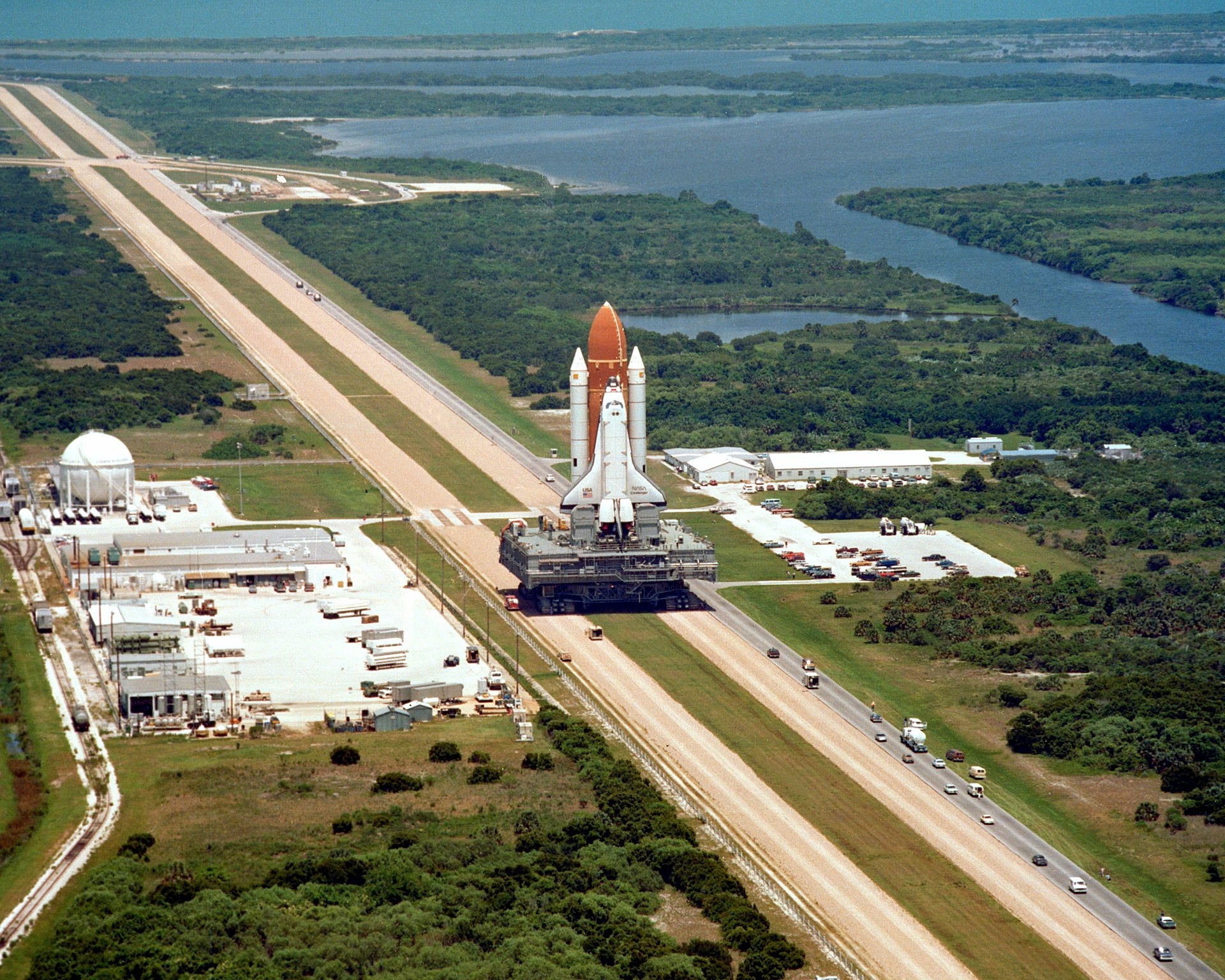
January 28, 1986, dawned bitterly cold at Cape Canaveral. Icicles clung to the launch gantry - a sight never seen at Kennedy Space Center. The temperature had plunged to 36°F overnight, well below the operating threshold for the shuttle's solid rocket booster O-ring seals. Engineers at Morton Thiokol pleaded with NASA to postpone. NASA overruled them.
Mission STS-51-L had already been delayed six times. On board were six NASA astronauts and one very special passenger: Christa McAuliffe, a high school social studies teacher from Concord, New Hampshire - the first private citizen selected to fly in space. Millions of schoolchildren across America were watching the live broadcast from their classrooms.
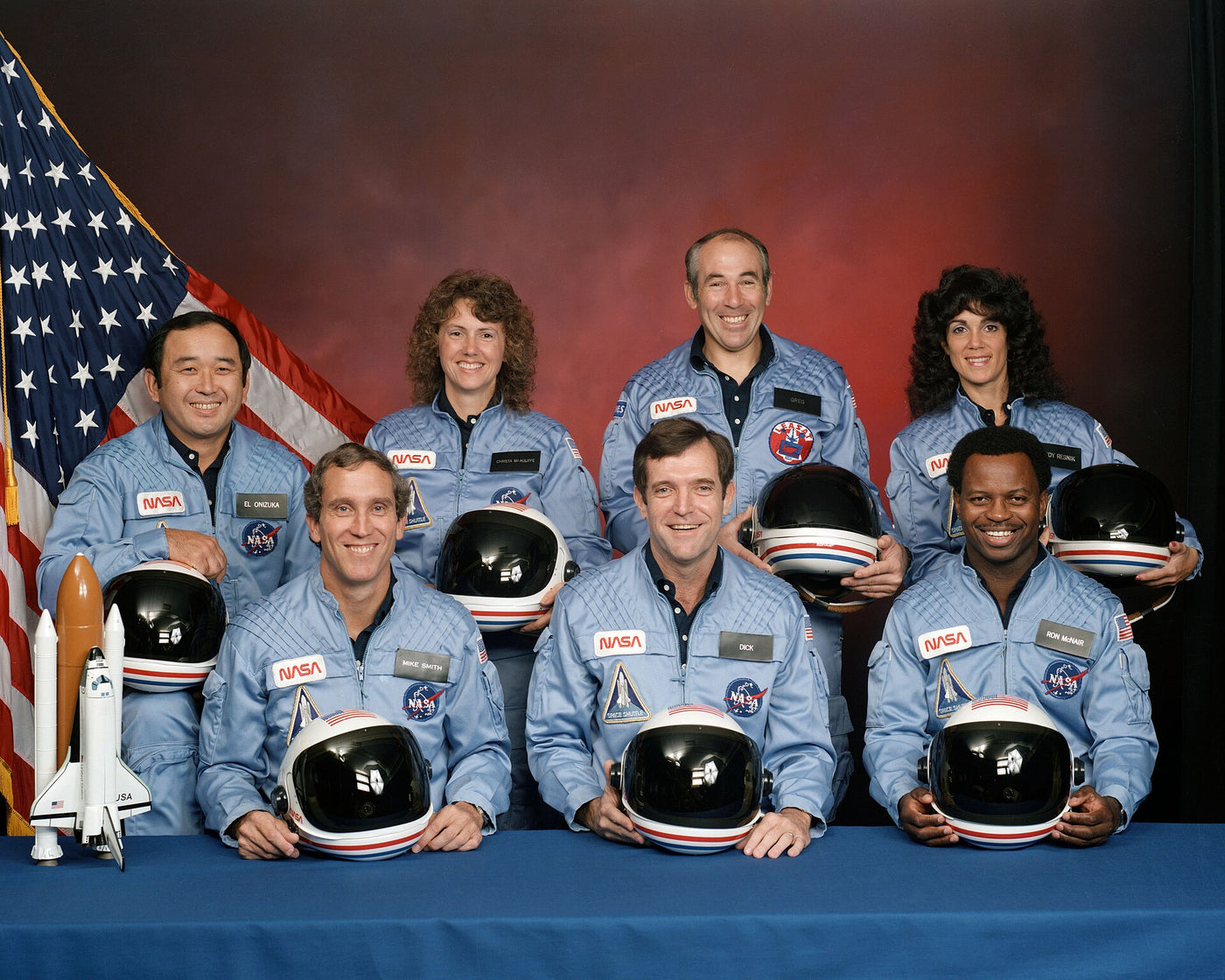
STS-51-L Crew - Challenger, January 1986
At 11:38 a.m. EST, Space Shuttle Challenger lifted off from Pad 39B. The ascent appeared nominal. In living rooms and classrooms across the country, people cheered.
CAPCOM: Challenger, go at throttle up.
CDR SCOBEE: Roger, go at throttle up.
Those were the last words from the flight deck of Challenger.
T + 73 Seconds
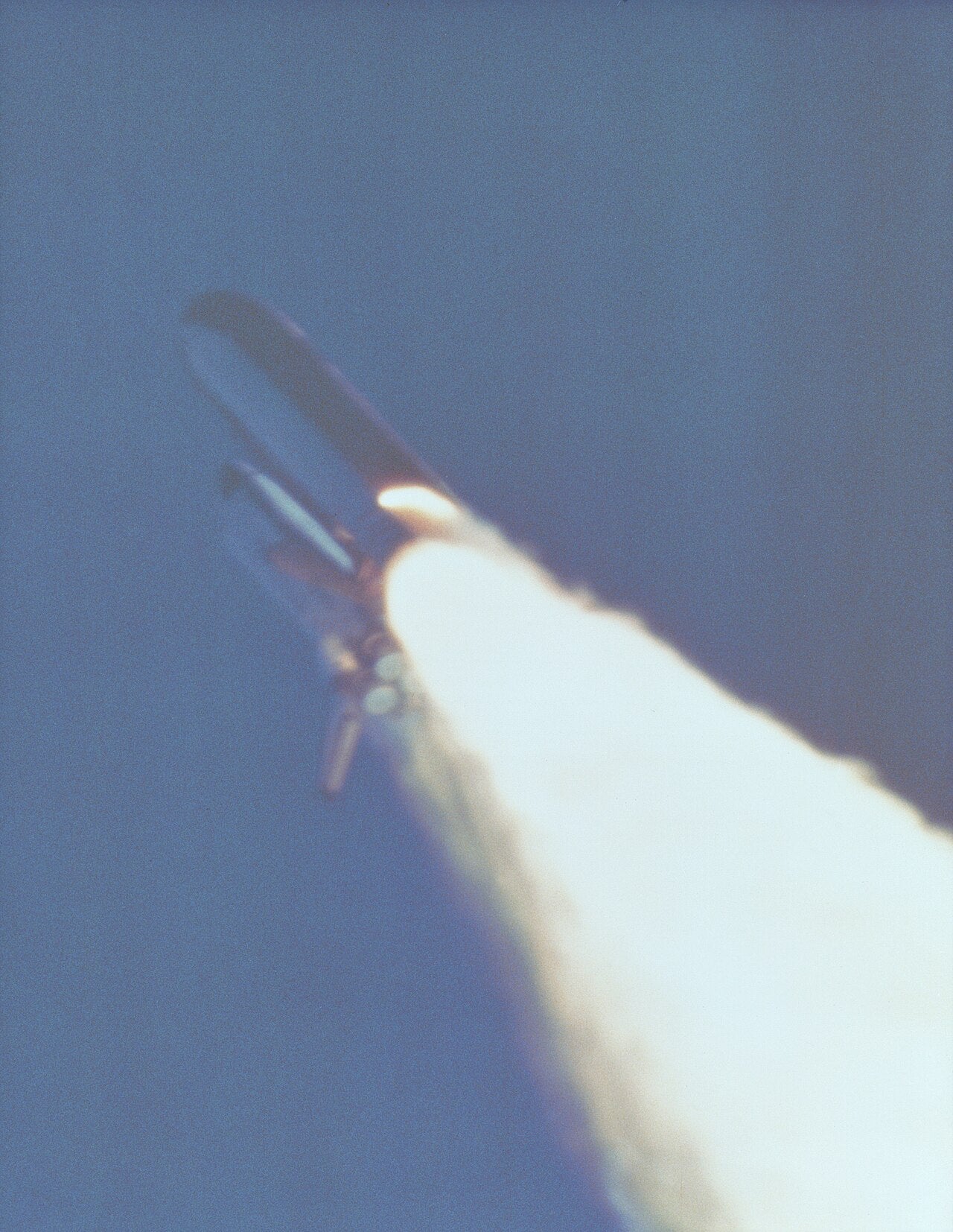
T+00:00
MISSION ELAPSED TIME
The Call
1238HRS
28 JANUARY 1986
The Call
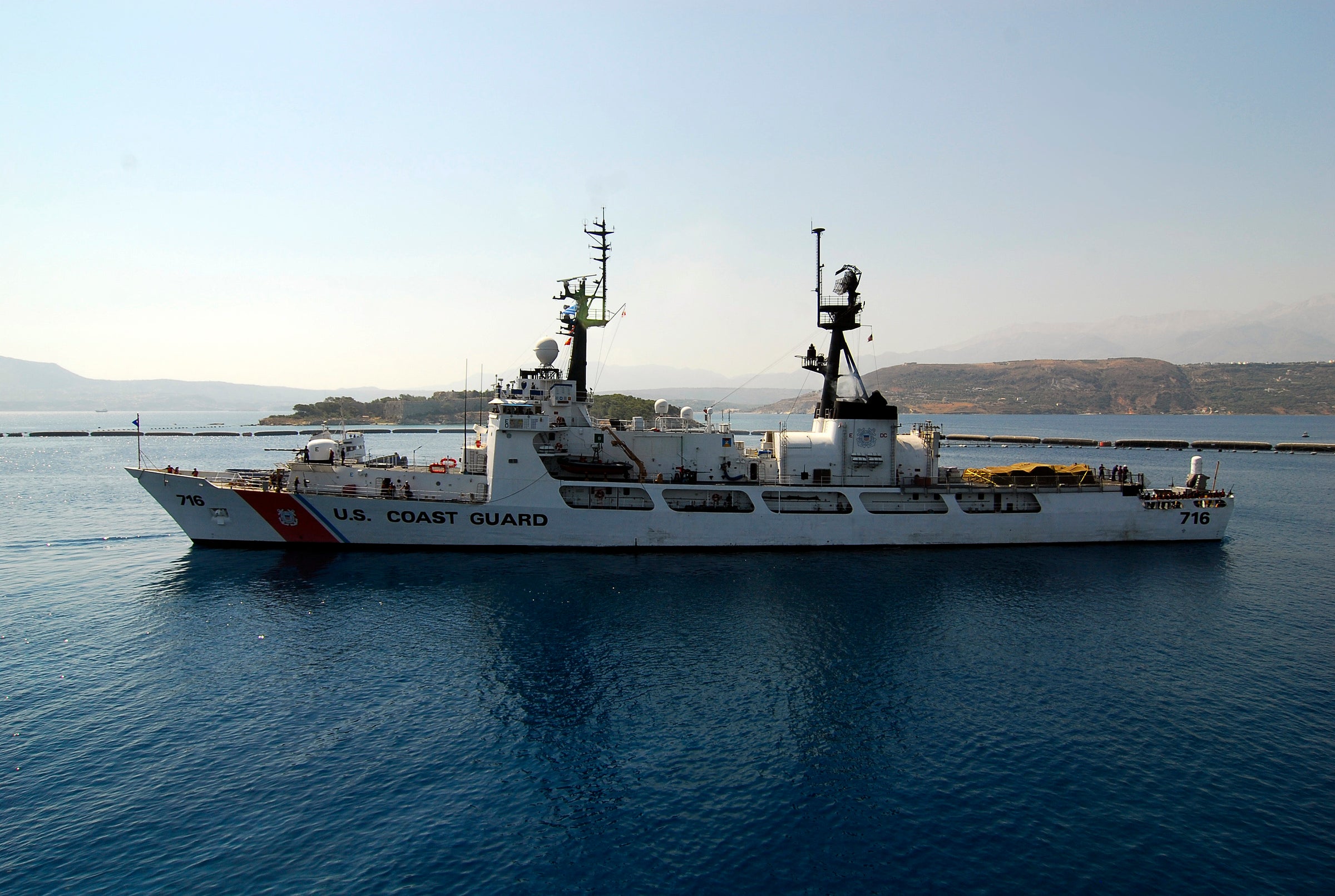
When Challenger broke apart 73 seconds after launch, the Coast Guard cutter Dallas was already underway. Eleven hours of steaming lay between the 378-foot Hamilton-class cutter and the debris field off Cape Canaveral. During those eleven hours, the Dallas received not a single situation report. No one knew what debris would be on the surface. No one knew what chemicals or explosives were involved. No one knew how long this would take.
As for organization - there was none. Several Navy vessels sat at anchor in the area. The 82-foot patrol boat USCGC Point Roberts had been on station since before the launch and became the first on-scene commander. USCGC Dauntless relieved her. The Dallas was coming to take charge of it all.
DISTRICT SEVEN: Dallas, you are designated on-scene commander for Challenger recovery operations. Proceed best speed. All Coast Guard and Navy assets in area will fall under your tactical command. Over.
On Scene
0015HRS
29 JANUARY 1986 - 0015 HOURS
On Scene
At fifteen minutes past midnight on January 29th, USCGC Dallas relieved USCGC Dauntless as on-scene commander. Three minutes later - three minutes - Cape Canaveral Range Control radioed that the debris in the area contained hazardous chemicals and should not be recovered.
How do you conduct a search when you're instructed not to recover the objects you're searching for? Gas masks were issued across the cutter. The crew was warned to treat any object emitting white or brown smoke, or any spherical objects with red or green markings, as extremely dangerous. Everyone handling evidence was to wear gloves. Nobody knew what had dispersed into the water after a nine-mile fall and a two-million-liter fuel explosion.
RANGE CONTROL: All units treat as extremely dangerous any object emitting white or brown smoke or any spherical objects with red or green markings. Vapors are toxic. Remain upwind. Do not recover. Mark position only. Over.
The Dallas's first action was to poll every vessel in the area - who was out there, what assets they had, how much fuel, what they'd already done. Then the operations department built a communications network from scratch, a Task Group Orestes net that put all ships on teletype rather than voice radio. Order from chaos. That was the job.
The Search
5
AIRCRAFT
COORDINATED
COORDINATED
13+
SURFACE VESSELS
ON STATION
ON STATION
486
SQUARE NAUTICAL
MILES SEARCHED
MILES SEARCHED
7
MONTHS OF
RECOVERY OPS
RECOVERY OPS
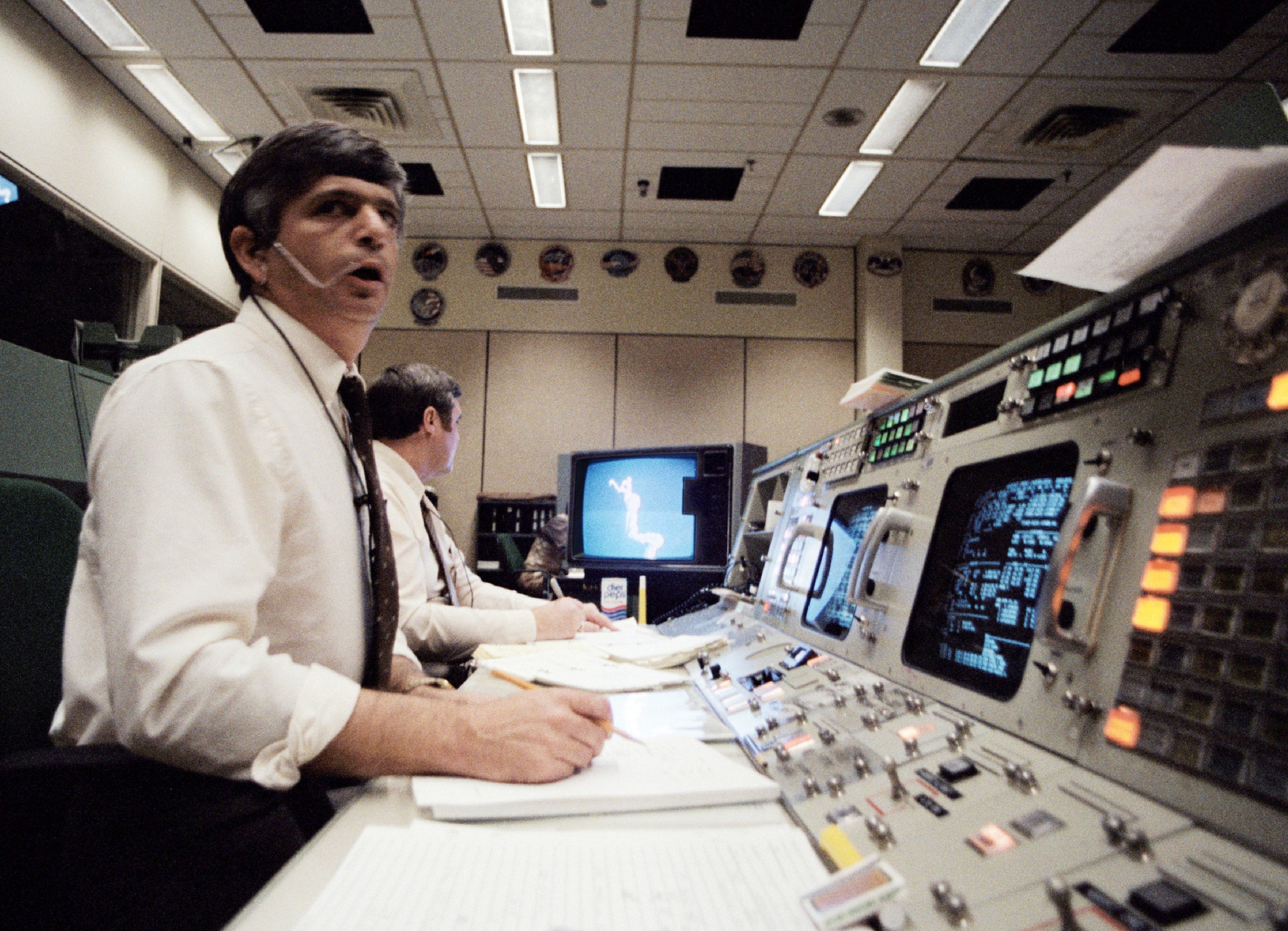
It was the largest surface search the United States Coast Guard had ever participated in. The Dallas coordinated the movements of aircraft and vessels simultaneously - launching and recovering her own small boats and helicopters, sometimes within minutes of each other, while directing a fleet spread across hundreds of square miles of Atlantic Ocean.
0
FRAGMENTS RECOVERED
What They Carried

The Dallas's crew had been at sea when the disaster happened. They'd missed the days of nonstop news coverage, the replayed footage, the nation's collective grief. In a strange way, this helped. A monumental task lay before them, and sentiment would have to wait.
Each piece of debris hauled aboard told part of the story. Exterior thermal tiles - the distinctive black squares that protected the orbiter during reentry. Twisted sections of the external tank. Fragments of the solid rocket boosters that had betrayed their crew. Every piece was photographed, catalogued, and transported to the Trident Basin at Cape Canaveral Air Force Station for investigation.
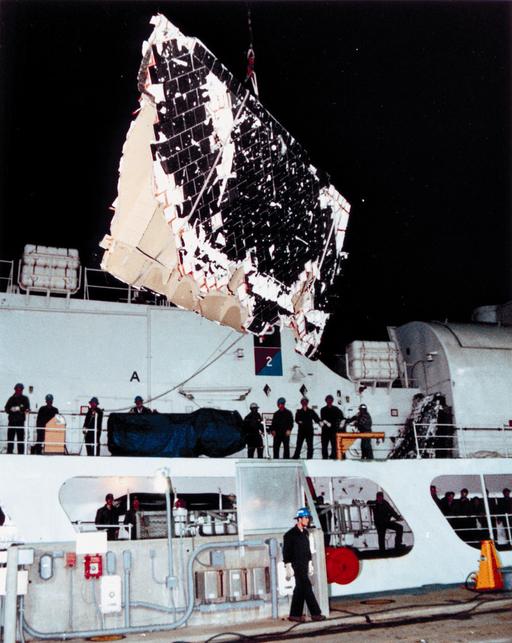
Shuttle Exterior Tiles - Recovered by USCGC Dallas
The launching and recovery of small boats and helicopters - sometimes within minutes of each other - required extraordinary coordination. On Coast Guard cutters, the same crew members handle both evolutions. Conducting them simultaneously demanded flexibility that only a seasoned crew could deliver.
Many additional vessels arrived daily, each needing to be briefed. Rather than dealing with each one separately, the Dallas's operations department created one comprehensive message - detailed briefings, instructions, hazard warnings - broadcast to every newcomer. One message. Everyone on the same page. That was the Coast Guard way.
The Crew Compartment
D38
7 MARCH 1986
The Crew Compartment
Thirty-eight days after the disaster, Navy divers located the crew compartment of Challenger on the ocean floor. The cabin had separated intact during the breakup at 46,000 feet, then struck the Atlantic at over 200 miles per hour. The remains of all seven crew members were inside.
The recovery that followed was carried out with extraordinary care and solemnity. The crew's remains were brought ashore under cover of darkness. An honor guard met the USS Preserver at Port Canaveral. Military ambulances transported the astronauts home for the last time.
Three of the crew's Personal Egress Air Packs had been manually activated. Someone on board Challenger had been alive and conscious after the breakup, trying to save their crewmates during the two-and-a-half-minute fall to the ocean.
"The future doesn't belong to the fainthearted; it belongs to the brave. The Challenger crew was pulling us into the future, and we'll continue to follow them." - PRESIDENT RONALD REAGAN - 28 JANUARY 1986
STS-51-LTHE CREW OF SPACE SHUTTLE CHALLENGER
FRANCIS R. SCOBEE
COMMANDER
MICHAEL J. SMITH
PILOT
JUDITH A. RESNIK
MISSION SPECIALIST
ELLISON S. ONIZUKA
MISSION SPECIALIST
RONALD E. MCNAIR
MISSION SPECIALIST
GREGORY B. JARVIS
PAYLOAD SPECIALIST
S. CHRISTA MCAULIFFE
TEACHER IN SPACE
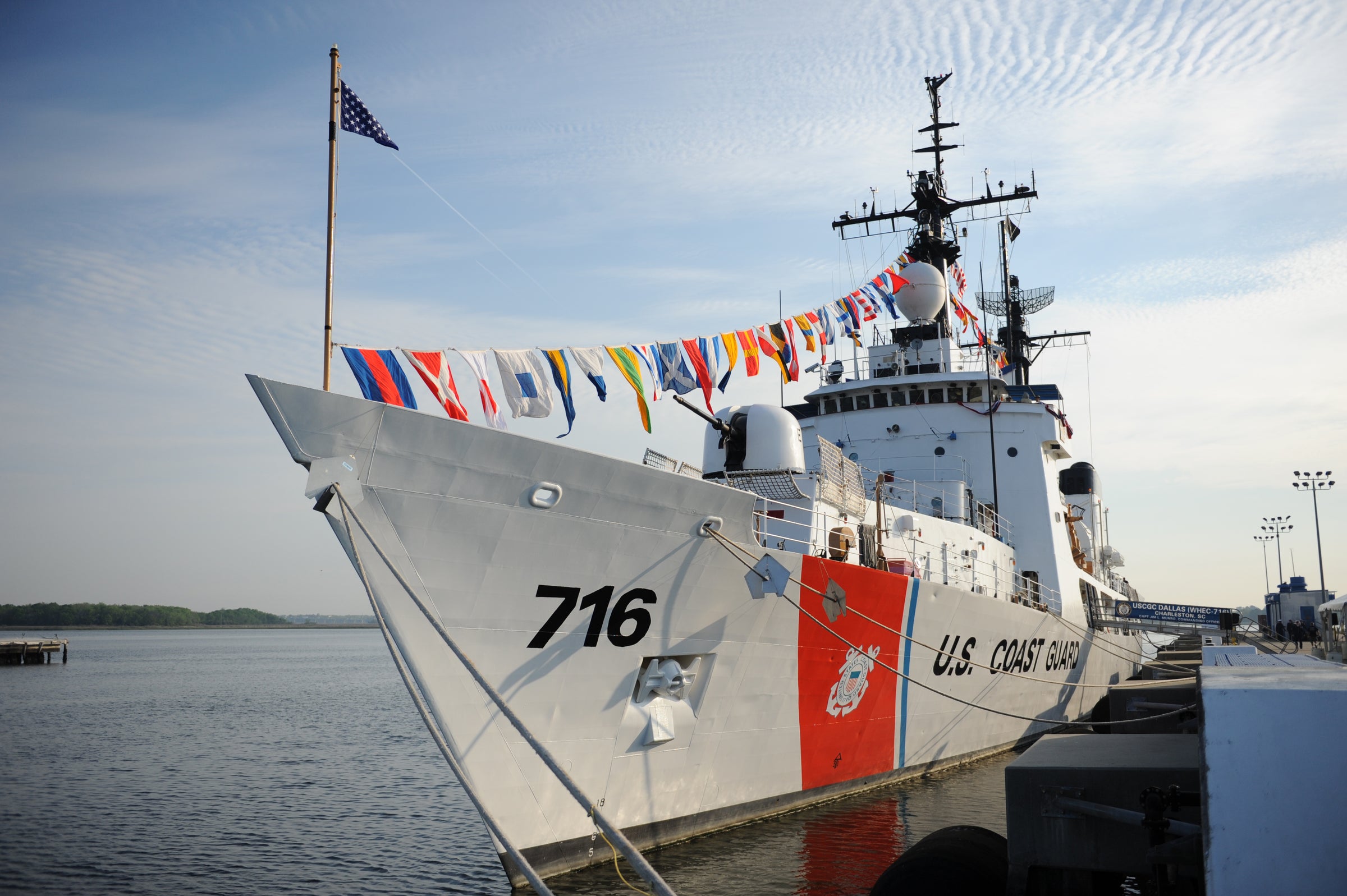
USCGC Dallas was a Hamilton-class high endurance cutter, 378 feet of Coast Guard steel commissioned in 1967 at the Avondale Shipyard in New Orleans. Named for Alexander J. Dallas, Secretary of the Treasury under James Madison, she served 45 years in the Atlantic - from the coast of Vietnam to the Black Sea to the shores of West Africa.
The Challenger recovery earned Dallas a Coast Guard Meritorious Unit Commendation. But the mission was only one chapter in a career that spanned nearly half a century. Seven combat patrols off Vietnam. 161 gunfire support missions. Command ship for the Mariel Boatlift. Flagship for the Haitian migrant crisis. Armed escorts through the Straits of Gibraltar during Operation Iraqi Freedom. Humanitarian aid to the Republic of Georgia.
45
YEARS OF
SERVICE
SERVICE
161
VIETNAM GUNFIRE
SUPPORT MISSIONS
SUPPORT MISSIONS
7,665
ROUNDS OF 5-INCH
FIRED IN COMBAT
FIRED IN COMBAT
35,000
HAITIAN MIGRANTS
RESCUED
RESCUED
Dallas was decommissioned on March 30, 2012, and transferred to the Philippines as an excess defense article, where she served on as BRP Ramon Alcaraz. Forty-five years of service. Countless missions. One crew after another, stepping aboard and carrying forward the name.
7
SOULS LOST ABOARD CHALLENGER
To the crew of STS-51-L, who reached for the stars - and to the men and women of USCGC Dallas who brought them home.
SEMPER PARATUS